Does Neuro Serge Really Work? What We Could (and Couldn’t) Verify
So, does Neuro Serge work? The honest answer is that nobody outside the company can say for certain. Two of its seven ingredients have real human research behind them for general memory support, but no independently verifiable trial has tested the finished Neuro Serge capsule, none of the seven ingredient doses is disclosed, and one listed ingredient name could not be matched to a known compound. Any benefit you might notice is therefore uncertain and, if it comes, likely to be modest.
This article goes through what we could and could not verify, ingredient by ingredient, and explains what a realistic expectation looks like for adults over 50 who are worried about their memory. It builds on our full Neuro Serge review, so if you want the complete picture of the formula, the sales presentation and the pricing, start there. Here we focus on one question: what is the evidence that this supplement does anything?
2 Bottles · 60-Day Supply
$79 / bottle
- ✓ Lowest-commitment option to try the formula
- ✓ Backed by the 180-day money-back guarantee
- ✓ Plus shipping (no free-shipping bonus at this tier)
Total: $158 + shipping

3 Bottles · 90-Day Supply
$69 / bottle
- ✓ The vendor’s advertised “most popular” tier
- ✓ Backed by the 180-day money-back guarantee
- ✓ Free US shipping + 3 bonus guides included
Total: $207 + free US shipping

6 Bottles · 180-Day Supply
$49 / bottle
- ✓ The lowest per-bottle price the vendor offers
- ✓ Backed by the 180-day money-back guarantee
- ✓ Free US shipping + 3 bonus guides included
Total: $294 + free US shipping
Prices and package details shown are pulled from currently available marketing sources and can change — click any package above to see live current pricing on the official order page.
For reference, at the time we checked (and prices can change), the vendor listed a 2-bottle Starter package at $79 per bottle ($158 plus shipping), a 3-bottle Most Popular package at $69 per bottle ($207 with free US shipping and three bonus guides), and a 6-bottle Best Value package at $49 per bottle ($294 with free US shipping). All three tiers are covered by a 180-day money-back guarantee, which matters when the evidence for a product is as incomplete as it is here.
Does Neuro Serge Really Work? The Short Answer
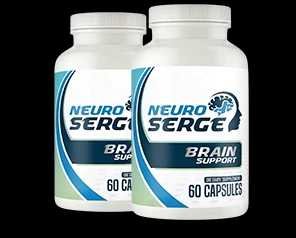
Neuro Serge is a daily capsule marketed for memory and cognitive support. It names seven ingredients: Phosphatidylserine, Thyme-leaved Gratiola (the common name the sales page uses for Bacopa monnieri), something called “Suprasine A from Qian Ceng Ta,” Naringin, GABA, Bilberry and EGCG. Naming ingredients is a good start, because many supplements hide behind a proprietary blend. But “does Neuro Serge work” depends on three things that the product does not currently let you check: how much of each ingredient is in a capsule, whether the unfamiliar ingredient is what it claims to be, and whether the formula as a whole has ever been tested in people.
Here is how we would summarize it in plain terms:
- Plausible, not proven. Some ingredients have credible research for general memory support, so it is not an empty formula on paper.
- Unverified for this product. There is no published human trial on Neuro Serge itself that we could find or that the vendor links to.
- Not a treatment. No supplement, including this one, has been shown to reverse memory loss, dementia or Alzheimer’s disease.
- Low financial risk, if you choose to try it. The 180-day refund window gives you time to judge it fairly, although you should read the order terms yourself before buying.
If you are looking for a clear yes or no, the most defensible position is “maybe a small effect for some people, with no way to predict who.” That is less exciting than the sales presentation, but it is a fair reflection of the evidence.
What Can a Memory Supplement Realistically Do?
Before judging Neuro Serge, it helps to be clear about what any over-the-counter memory supplement can reasonably be expected to do. The research on dietary supplements and cognition, taken as a whole, is mixed. Some herbal extracts show small improvements on specific memory tests in specific groups of people over weeks or months. Many others show nothing beyond placebo. Even the better results tend to be modest: a slightly better score on a word-recall test is not the same as getting back the sharp mind of your thirties.
It also helps to know why memory slips happen in the first place. Everyday forgetfulness in later life has many contributors that have nothing to do with a missing nutrient. Poor sleep, untreated sleep apnea, depression and anxiety, thyroid problems, low vitamin B12, hearing loss, side effects of some medicines, alcohol, chronic stress and uncontrolled blood pressure or blood sugar can all make thinking feel foggy. A capsule cannot fix those. Our guide to common causes of brain fog walks through many of them, and it is worth reading before you assume that memory is a supplement problem.
Then there is the placebo effect, which is strong for subjective things like “how sharp do I feel?” When you start a new supplement with hope, pay attention to your memory more closely, and perhaps also sleep better or exercise more because you are feeling motivated, you may feel improvement that the capsule did not cause. That is not a reason to dismiss how you feel, but it is a reason to measure rather than guess, which we cover later in this article.
So the realistic upper bound for a product like this is a small, gradual, general-support effect, and only if the ingredients are present at useful doses. The sales presentation promises something very different, including the ability to “rewind” memory loss. As our review points out, that kind of disease-reversal language goes well beyond anything a supplement can honestly claim.
What Does the Evidence Say About Each Neuro Serge Ingredient?
Here is where independent science and the formula meet. We used the main review as our base for what the vendor lists, and we describe the research in general terms without citing specific numbers we cannot back up.
Bacopa monnieri (listed as Thyme-leaved Gratiola)
This is the best-supported ingredient in the formula. Several randomized controlled trials, mostly using standardized extracts taken daily for around 8 to 12 weeks, have reported modest improvements in memory and learning measures in healthy adults. The pattern matters: Bacopa is generally described as slow-acting, with effects, if any, building over weeks rather than days. Stomach upset and loose stools are among the more commonly reported side effects. The catch is that those trials used specific extracts at specific doses, and Neuro Serge does not tell you which extract or how much it contains.
Phosphatidylserine
Phosphatidylserine is a fatty molecule that forms part of every cell membrane, including those of brain cells. Several older double-blind trials in older adults with age-related memory complaints reported some benefit. The research base is smaller and older than Bacopa’s, and earlier studies used different sources of the compound than are common today, so results do not map perfectly onto current products. It is a reasonable ingredient, not a proven one.
“Suprasine A from Qian Ceng Ta”
We could not find “Suprasine A” in any supplement ingredient database, pharmacology reference or published research that we checked. “Qian Ceng Ta” is the Chinese common name for Huperzia serrata, a club moss best known as a natural source of Huperzine A, which has been studied, mostly in China, for memory support through a mechanism that blocks the breakdown of acetylcholine. Whether “Suprasine A” is a rebranded Huperzine A, a proprietary plant extract or something else is not something the vendor explains. Because we cannot identify it, we cannot assess its evidence at all.
EGCG, GABA, Naringin and Bilberry
EGCG is a green tea polyphenol with a very large antioxidant research base, but human data on actual cognitive outcomes is mixed and thin. GABA is a calming neurotransmitter, yet whether oral GABA reaches the brain in meaningful amounts is scientifically disputed, and human studies tend to show relaxation or stress-related effects rather than direct memory effects. Naringin, a citrus flavonoid, and bilberry, a berry studied mostly for eye and blood-vessel health, have antioxidant and anti-inflammatory research that comes largely from animal or laboratory studies. They are not unreasonable ingredients, but they are not where the memory evidence lies.
Why Can’t We Verify the Trial Claims on the Sales Page?
The Neuro Serge presentation cites 37 references, a trial with 850 participants, an 86-person study reporting a “102% improvement,” and a list of named institutions including MIT, Harvard, Stanford, Columbia, Washington University and Oregon University. As our main review notes, none of these references, studies or citations is linked, listed or viewable on the page. We were not able to verify any of those specific statistics against an independent source.
That does not automatically mean every number is invented. It means they do not meet a basic standard of verifiability. A credible trial can be found: it has a registry entry, a named research team, a journal publication, a described method and a stated dose. When a sales page quotes a large trial but gives you none of those details, the sensible response is to treat the number as marketing, not evidence.
It is worth understanding why a name like a famous university does not settle this. Researchers at big institutions publish thousands of studies on hundreds of topics, including individual compounds like Bacopa or green tea polyphenols. Saying that a university has studied a compound is very different from saying that the university has tested or endorsed this particular capsule. The main review makes the same point: none of the named institutions is tied to a specific study on the page.
A practical test for any supplement claim is to ask four questions. Who ran the study? Where was it published? How many people, over how long, and compared with what? What dose of which ingredient was used? If a product cannot answer even one of these, treat its statistics with caution. For a deeper checklist, see our guide on red flags in fake nootropic supplements.
Why Do Undisclosed Doses Matter for Results?
With supplements, dose is the whole story. A herbal ingredient that works at a few hundred milligrams in a study may do nothing at a few milligrams in a capsule, and a formula can truthfully list an ingredient while containing a token amount. Neuro Serge’s order page shows no milligram amount for any of the seven ingredients, which means you cannot compare the capsule with the doses used in the research on Bacopa or Phosphatidylserine.
The missing information also makes safety harder to judge. If “Suprasine A” does turn out to be a Huperzine A-type compound, that would be a more pharmacologically active ingredient than most in this category, and an active ingredient is exactly the kind where the amount matters most. Our review makes the point that clear labeling matters more than usual for that reason.
| What you would want to know | What Neuro Serge tells you |
|---|---|
| Amount of each ingredient per capsule | Not disclosed for any of the seven |
| Type of Bacopa extract used | Not stated beyond the name |
| What “Suprasine A” actually is | Not explained; not found in the databases we checked |
| Published trial of the finished product | None that we could verify |
| Manufacturer, facility and testing lab | Claims of US manufacturing and third-party testing, but no names given |
In short, the product asks you to trust the formula without giving you the numbers you would need to check it. If you are willing to ask, the company’s customer support may be able to provide dose information, but we have no way of knowing whether they will, and we would not assume the answer matches the claims.
What Results Are Realistic, and How Long Might They Take?
The vendor describes benefits building over 30, 90 and 180 days. As the main review points out, that timeline is a marketing framework, not a clinical finding. There is no verified trial of this product from which to take a number.
What we can say from general science is that the better-studied ingredients, like Bacopa, are typically evaluated over two to three months, not days. If you try any herbal memory supplement and expect to feel something in the first week, you are probably measuring placebo or mood. If you give it a fair period, the realistic outcomes fall into three groups:
- No noticeable change. This is common with supplements generally and is a completely plausible outcome here.
- A small, subtle improvement. For example, fewer “what was I about to say?” moments, or slightly easier recall of names. This is the best-case outcome the evidence for individual ingredients would support.
- Side effects without benefit. Digestive upset is the most commonly reported issue with herbal extracts, and some people simply do not tolerate a given formula.
What is not realistic is the dramatic restoration described in the sales story. Phrases like “rewind memory loss” and returning to the “crystal-clear mind you had in your early 30s” are not supported by independent research for this product or, as far as we know, for any over-the-counter supplement.
Because the guarantee runs for 180 days, you do have time to judge fairly. If you do decide to try it, the 6-bottle package is the only one that lasts the full guarantee window, which is a point in its favor for evaluation but also means a larger upfront payment. Our main review discusses that trade-off. Remember that a refund is only helpful if you act within the window and keep your order details, so note the date you start.
How Can You Track Whether Neuro Serge Is Working?
Because feelings are unreliable, a simple tracking routine gives you a better answer than memory of how you felt. Our guide on how to tell if a brain supplement is working goes into more detail, but here is a practical approach you could use with any memory supplement.
- Take a baseline before you start. For two weeks, jot down a few simple observations each evening: did you misplace keys, forget an appointment, struggle for a word, or need to re-read something? Use a tally, not a diary.
- Change one thing at a time. If you start the supplement the same week as a new exercise routine, a new medicine or a big diet change, you will not know which one made the difference.
- Use the same tests. A short word list you try to recall after ten minutes, a daily crossword or a regular card game score can act as a rough yardstick. These are not clinical tests, but they allow comparison over time.
- Ask someone you trust. A spouse, friend or adult child often notices changes in everyday memory that you do not.
- Review at set points. Check your tally at 30, 60 and 90 days, and decide before 180 days whether to keep going or use the refund.
- Record side effects. Stomach upset, headaches, dizziness or sleep changes are worth noting and mentioning to a pharmacist or doctor.
Keep your expectations honest. If your tally at three months looks the same as your baseline, that is useful information, and it means the supplement is probably not doing much for you.
When Should Memory Changes Prompt a Doctor Visit?
This is the most important section of the article. A supplement is not a substitute for medical evaluation. Some patterns of memory change deserve prompt attention from a doctor rather than a product trial:
- Memory loss that comes on suddenly, or changes quickly over days to weeks.
- Confusion about time, place or familiar people, or getting lost in familiar places.
- Progressive memory loss that is getting worse over months, or that other people have noticed and raised with you.
- Difficulty managing everyday tasks that used to be routine, such as paying bills, following a recipe or taking medicines correctly.
- Memory changes together with personality change, new weakness, slurred speech, severe headache or trouble walking. Sudden symptoms like these need urgent care.
A doctor can check for reversible contributors such as medication effects, thyroid problems, vitamin deficiencies, depression and sleep disorders, and can arrange proper cognitive testing if appropriate. Early evaluation matters, because some causes of memory trouble are treatable and because a real diagnosis, if there is one, opens access to care and planning. If you have been dealing with persistent fogginess, you may also find our article on what to do when brain fog won’t go away useful.
If you do choose to try Neuro Serge, tell your doctor or pharmacist first, particularly if you take prescription medicines. The review notes that a Huperzine A-type ingredient, if present, can interact with certain medications, and anyone taking medicines that affect the nervous system or memory should have that conversation before starting. Also let them know if you are pregnant, nursing or managing a health condition.
Frequently Asked Questions
Does Neuro Serge work for memory loss?
There is no verified evidence that it treats or reverses memory loss. Some of its ingredients have research supporting modest general memory support in certain groups, but that research does not prove the finished product works, and memory loss that is progressive or sudden should be assessed by a doctor.
How long does Neuro Serge take to work?
The vendor describes benefits at 30, 90 and 180 days, but that timeline is not backed by a verifiable trial. Research on herbal ingredients like Bacopa generally looks at effects over two to three months, so patience and honest tracking are more useful than expecting quick changes.
What are Neuro Serge results like?
We have not collected individual results and will not invent any. Realistically, outcomes range from no noticeable change to a small improvement, and the dramatic stories on the sales page are the manufacturer’s own marketing content, which we cannot verify.
Is the 850-person trial real?
We could not verify it. The sales page mentions it but does not link to or identify the study, the researchers or a publication, so we treat it as an unverified marketing claim.
Is Suprasine A the same as Huperzine A?
We cannot tell. “Suprasine A” did not match any compound in the databases and literature we checked, and its stated source plant is linked to Huperzine A, but the vendor does not confirm what it is.
Can Neuro Serge replace a dementia evaluation?
No. A supplement cannot diagnose or treat dementia, and it should not delay seeing a doctor if you or a family member has worrying memory changes.
Is it safe to take with my medications?
That depends on your medicines and on what is actually in the capsule. Because doses are not disclosed and one ingredient is unidentified, please show the label to your pharmacist or doctor before starting, especially if you take medicines that act on the nervous system.
What if it does not work for me?
The vendor states a 180-day money-back guarantee. Keep your order confirmation, follow the instructions supplied with your order, and contact the company within the window.
Our Take
Does Neuro Serge work? On the evidence available, it is a formula with some credible ingredients, but not a product with proof. Bacopa monnieri and Phosphatidylserine give it a legitimate foundation for general memory support, yet the missing doses, the unidentified “Suprasine A,” and the unverifiable trial statistics mean we cannot tell you it is likely to work, or how well. The sales story about reversing memory loss is not something we can support.
If you are curious and healthy, you understand that any effect would probably be small, and you are comfortable relying on the 180-day guarantee, trying it is a personal choice and not an unreasonable one. If you are worried about real changes in your memory, please start with a doctor instead. For other options in the same category, you can read our review of Phytomem One, another brain formula, and compare how each handles transparency.
Related reading: see what reviewers raise in Neuro Serge reviews and complaints, go through the formula in Neuro Serge ingredients explained, or check the price and refund details in Is Neuro Serge a scam?
Disclosure: we may earn a commission if you buy through our links, at no extra cost to you, and it does not change our assessment.