Red Flags: How to Spot Fake or Low-Quality Nootropic Supplements
Red Flags: How to Spot Fake or Low-Quality Nootropic Supplements
The nootropic and brain-health supplement market has exploded in recent years, which means it’s also become a magnet for low-quality, deceptively-marketed, and occasionally outright fraudulent products riding on genuine consumer interest in cognitive health. Before you buy any brain supplement, it helps to know the specific warning signs that separate a legitimate, honestly-marketed product from one that’s cutting corners or making claims it can’t back up. This guide walks through the real red flags to watch for, explains why each one matters, and shows what a more trustworthy product actually looks like by comparison.
Red Flag #1: Proprietary Blends That Hide Actual Dosing
This is one of the most common and most important red flags in the entire supplement industry. A “proprietary blend” lists a group of ingredients together with only a total combined weight, hiding how much of each individual ingredient is actually in the product. This matters enormously because most ingredients only work at specific, research-backed doses — a proprietary blend could be 95% an inexpensive filler ingredient and 1% each of several expensive, research-backed compounds, and you’d have no way to know from the label.
What to look for instead: A supplement facts panel that lists each ingredient individually with its own specific dose in milligrams, allowing you to actually compare the formula against published research on effective doses. A formula with 10 named, individually-dosed ingredients (like the approach taken in Phytomem One’s ingredient list) at least gives you the transparency to do this kind of research yourself, which a proprietary blend never allows.
Red Flag #2: Claims of Instant or Dramatic Transformation
Be skeptical of any brain supplement marketing that implies a fast, dramatic transformation — “feel the difference in days,” before/after testimonials describing overnight changes, or language suggesting a single pill will meaningfully transform your cognitive function. Nearly every legitimate nootropic ingredient category (adaptogens, metabolic-support compounds, antioxidants) works gradually over weeks through cumulative biological mechanisms, not instantly through a single dose. Dramatic, fast-acting claims are far more consistent with either a stimulant doing the heavy lifting (check the label for caffeine) or marketing exaggeration than with how these ingredient categories actually function.
Red Flag #3: No Genuine Refund Policy, or an Unreasonably Short One
A supplement company confident in its product’s effectiveness has an obvious incentive to offer a meaningful refund window, since a longer window that actually lets customers fairly evaluate the product only costs the company money if the product genuinely doesn’t work as advertised at scale. Watch for: no refund policy at all, a very short window (under 30 days, which barely gives cumulative ingredients time to show an effect), refund policies buried in hard-to-find fine print, or online complaints specifically about refund requests being denied or ignored. A genuine, clearly-stated 60-day guarantee (long enough for a fair trial) is a meaningfully stronger trust signal than a vague “satisfaction guaranteed” claim with no specific terms.
Red Flag #4: Fabricated or Misrepresented Scientific Citations
Some lower-quality supplement marketing cites “clinical studies” that either don’t exist, don’t actually test the ingredient or dose in question, or are dramatically misrepresented from what the actual research found. This is different from (and worse than) the more common, industry-standard practice of extrapolating from real individual-ingredient research to a finished-product marketing narrative — the red flag here is citations that are fabricated or actively misleading about what real research found, not just marketing optimism built on real research.
How to check: If a product cites a specific study, search for it independently (Google Scholar and PubMed are both freely searchable) and read at least the abstract to confirm it says what the marketing claims it says. A legitimate product’s citations, even when the marketing overstates their implications, will generally hold up to this basic check — the study exists, involves a related ingredient, and found something in the general direction claimed, even if the marketing dramatizes it. If a cited study doesn’t exist, doesn’t test the claimed ingredient at all, or is about a completely unrelated topic, that’s a serious red flag.
Red Flag #5: Fake Urgency and Manufactured Scarcity
Countdown timers claiming a discount expires in minutes, “only 3 left in stock” messages that reset or reappear every time you revisit the page, and “today only” pricing that’s still there next week are all manipulation tactics designed to short-circuit careful decision-making by creating artificial time pressure. These tactics are common across low-quality digital marketing generally, not limited to supplements, but they’re a meaningful red flag in this category specifically because a legitimate health decision deserves careful consideration, not a rushed purchase driven by manufactured panic.
A trustworthy seller doesn’t need fake urgency, because a genuinely good product with honest pricing and a real guarantee doesn’t require pressure tactics to convert a customer who’s doing their own research. This site’s own standing policy is to never use fake countdown timers, false scarcity claims, or similar manipulation tactics in any review, regardless of what a vendor’s own marketing does.
Red Flag #6: No Way to Verify the Company Behind the Product
Legitimate supplement companies are generally identifiable — a real company name, a physical address (even if it’s a fulfillment address rather than corporate headquarters), and a customer service contact method that actually works. Red flags here include: no identifiable company name anywhere on the site, contact forms that never receive a response, or a retailer/fulfillment platform (like ClickBank) that at least confirms the seller is going through a legitimate payment processing and buyer-protection system, even if the underlying brand is new or small.
Red Flag #7: Claims That Directly Cross Into Disease Treatment
Under U.S. regulations (DSHEA), supplements are legally prohibited from claiming to diagnose, treat, cure, or prevent any disease — that’s exclusively the domain of FDA-approved drugs. Legitimate supplement marketing uses careful language like “supports,” “promotes,” or “helps maintain” rather than “cures,” “treats,” or “reverses [specific disease].” A product explicitly claiming to cure or reverse a diagnosed medical condition (Alzheimer’s, dementia, or similar) is making an illegal claim that should raise serious doubts about the company’s overall legitimacy and regulatory compliance, distinct from more defensible marketing language around informally-named concepts inspired by real research.
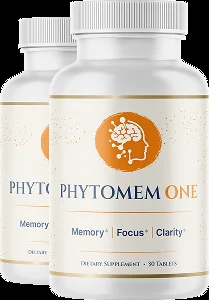
2 Bottles · 60-Day Supply
$79 / bottle
- ✓ Save $40 vs. single-bottle price
- ✓ Backed by the 60-day money-back guarantee
- ✓ Includes all 3 free bonus guides
Total: $158 + shipping
3 Bottles · 90-Day Supply
$59 / bottle
- ✓ The vendor’s advertised best-savings tier
- ✓ Backed by the 60-day money-back guarantee
- ✓ Free US shipping + all 3 bonus guides
Total: $177 + free US shipping
6 Bottles · 180-Day Supply
$49 / bottle
- ✓ The lowest per-bottle price the vendor offers
- ✓ Backed by the 60-day money-back guarantee
- ✓ Free US shipping + all 3 bonus guides
Total: $294 + free US shipping
Prices and package details shown are pulled from currently available marketing sources and can change — click any package above to see live current pricing on the official order page.
Red Flag #8: Fake or Manipulated Customer Reviews
Review manipulation is unfortunately common across the entire e-commerce landscape, not just supplements, but it’s worth knowing the specific patterns: a burst of near-identical five-star reviews posted within a short window (suggesting a coordinated campaign rather than organic feedback), reviews with overly polished, sales-copy-like language that mirrors the product’s own marketing almost verbatim, reviewer accounts with no other review history, and the absence of any verified-purchase indicator on platforms that offer one. On the flip side, an unusually large volume of extremely vague, emotionally negative reviews with no specific details can indicate a competitor-driven negative campaign rather than genuine customer dissatisfaction — skepticism should run in both directions, not just toward positive reviews.
Red Flag #9: Testimonial Disclaimers That Are Buried or Overly Vague
Nearly every supplement sales page includes some form of testimonial disclaimer (something like “results not typical” or “individual results may vary”), but the specificity and prominence of that disclosure matters. A vague, generic disclaimer buried in tiny footer text is less trustworthy than a specific, clear statement about exactly what’s been altered (names changed for privacy, video content potentially recreated or AI-assisted) even when that specific disclosure reveals something less flattering — a company willing to be specific about what it’s altered is, somewhat counterintuitively, demonstrating more transparency than one hiding behind vague boilerplate, even though both disclosures point to the same underlying practice of not presenting testimonials as fully verified accounts.
Red Flag #10: No Information About Manufacturing Standards
Legitimate supplement manufacturers typically disclose some information about where and how their product is made — facility certifications (like NSF, GMP/Good Manufacturing Practice compliance, or organic handling standards), country of manufacture, or third-party testing practices. The complete absence of any such information is a mild red flag worth noting, though it’s also worth understanding what these claims do and don’t guarantee: “GMP compliant” refers to manufacturing process standards, not an independent verification that the specific claimed ingredients are actually present at the labeled doses in the finished product, which requires separate third-party lab testing that not every supplement company undergoes or publishes.
How to Actually Research a Product Before Buying
Putting this all together, here’s a practical research process that takes maybe 15-20 minutes and covers the red and green flags above:
- Read the full ingredient list and check whether it’s individually dosed or a proprietary blend.
- Search for one or two of the more unusual named ingredients plus “research” or “clinical trial” to get a rough sense of whether real science exists behind them.
- Find and read the actual refund policy, not just a summary, including how to initiate a return and any conditions attached.
- Check the sales page for urgency tactics — revisit it a day later and see if the “limited time” offer or stock count has mysteriously changed.
- Search the company name plus “complaints” or “reviews” on a general search engine to see what comes up beyond the company’s own site, while applying the review-skepticism principles above to whatever you find.
- Read the fine print disclaimers at the bottom of the page, which often contain more honest, specific information (testimonial disclosures, manufacturing claims, legal disclaimers) than the main marketing copy.
Green Flags: What a More Trustworthy Product Looks Like
Having covered the red flags, it’s worth being equally specific about the positive signals that suggest a more trustworthy product:
- Individually named and dosed ingredients rather than a hidden proprietary blend, allowing genuine independent research.
- Specific, checkable sourcing details (where ingredients come from, what form/extract is used) rather than vague generic claims.
- A meaningful refund window (ideally 60 days or more) with clearly stated, easy-to-find terms.
- Citations that hold up to independent verification, even if the marketing narrative built on top of them is more dramatic than the underlying research strictly supports.
- No fake urgency or scarcity tactics — honest, consistent pricing rather than manufactured countdown pressure.
- Identifiable company information and functioning customer service.
- Careful, legally-compliant marketing language (“supports,” “may help”) rather than explicit disease-treatment claims.
- Honest disclosure of limitations, such as disclaimers about testimonial identities or the preliminary nature of certain research claims, disclosed clearly rather than buried.
Applying This Checklist: A Worked Example
To make this concrete, here’s how these red and green flags apply to a specific product we’ve reviewed in depth. Phytomem One, a nootropic supplement built around brain inflammation and metabolic-support ingredients, checks several green-flag boxes: all 10 ingredients are individually named and dosed, it carries a genuine 60-day guarantee, and its underlying research citations (on ingredients like berberine, saffron, and Morosil) are real, checkable, published research rather than fabricated studies, even though the finished-product claims extrapolate further than the individual-ingredient research strictly proves.
It also has a couple of items worth noting honestly: its “Plastic Stranglehold” and “Type 3 Diabetes” marketing framings are dramatized names for real but preliminary research areas, and two of its three advertised bundle “savings” figures don’t cleanly reconcile against simple per-bottle arithmetic. Neither of these rises to the level of a serious red flag (fabricated citations, fake urgency, no refund policy) — they’re marketing embellishments common across the industry rather than signs of a fraudulent or untrustworthy operation — but a genuinely thorough buyer-education resource should flag them rather than pretend every marketing claim is perfectly precise. We cover this balance in much more detail in our full Phytomem One review and our evidence-based analysis of its claims.
A Quick Pre-Purchase Checklist
Before buying any nootropic or brain-health supplement, run through this short checklist:
- Are ingredients individually named and dosed, not hidden in a proprietary blend?
- Is there a genuine refund policy with a reasonable window (ideally 60+ days) and clear terms?
- Do marketing claims describe gradual, plausible mechanisms rather than instant transformation?
- Do you see fake urgency tactics (countdown timers, disappearing “limited stock” messages)?
- Can you find and identify the company behind the product?
- Does any cited research actually exist and relate to the claimed ingredient/outcome when you check it yourself?
- Does the marketing avoid explicit disease-cure claims in favor of “supports”/”promotes” language?
A product that clears most or all of these checks isn’t guaranteed to work for you personally — individual response to any supplement varies — but it’s a meaningfully more trustworthy starting point than one that fails several of them.
Frequently Asked Questions
Are all ClickBank-sold nootropic supplements untrustworthy?
No — ClickBank is a large, established retail platform used by many legitimate supplement brands alongside less scrupulous ones. Being sold through ClickBank isn’t itself a red flag; the red flags described in this article (proprietary blends, fake urgency, fabricated citations, no refund policy) are what actually distinguish trustworthy products from untrustworthy ones, regardless of which platform processes the sale.
What’s the single most important red flag to check first?
Proprietary blends hiding actual ingredient dosing is arguably the most consequential red flag, since it removes your ability to do any further independent research on whether the formula is dosed at levels consistent with published research — every other red flag can at least be partially investigated, but a hidden dose leaves you with no information to work with at all.
Is it a red flag if a supplement uses dramatic-sounding marketing names for real research concepts?
It’s a yellow flag worth noting rather than an automatic disqualifier, provided the underlying research area is real and the company doesn’t claim the specific product has been proven to address it in a finished clinical trial. The distinction between “dramatized name for a real, if preliminary, research area” and “fabricated science” is worth understanding, and this article’s worked example above walks through exactly that distinction for one specific product.
How can I verify a scientific citation myself?
Search the study title or described finding on Google Scholar or PubMed (both free, public databases) and read at least the abstract to confirm it tests the ingredient and outcome claimed. This takes just a few minutes per citation and is one of the most effective ways to distinguish real research-based marketing from fabricated claims.
Should I avoid a supplement entirely if it has even one yellow flag?
Not necessarily — the framework in this article distinguishes between serious red flags (fabricated citations, fake urgency, no refund policy, hidden proprietary blends) that should genuinely disqualify a product, and milder yellow flags (dramatized marketing names for real research, advertised savings figures that don’t perfectly reconcile) that are common across the industry and worth noting rather than treating as disqualifying on their own. Weigh the overall pattern rather than rejecting a product for a single minor issue while ignoring an otherwise strong track record on the more serious checks.
For our complete evaluation of a specific nootropic supplement using this exact framework, see our full Phytomem One review, our ingredient-by-ingredient breakdown, and our honest look at its reviews and complaints.