Neuro Serge Ingredients Explained: All 7 Compounds, Including the One We Couldn’t Identify
The Neuro Serge ingredients list is short and, unusually, fully named: Phosphatidylserine, Thyme-leaved Gratiola (Bacopa monnieri), “Suprasine A from Qian Ceng Ta,” Naringin, GABA, Bilberry and EGCG. Six of the seven are recognizable supplement ingredients. The seventh, “Suprasine A,” is a name we could not match to any compound in the databases and literature we checked, and none of the seven comes with a disclosed dose.
This guide explains each compound in plain language: what it is, what the research does and does not show, what cautions apply, and what we do not know because the label does not say. It supports our main Neuro Serge review, which covers the sales presentation, pricing and guarantee. We rely on that review for the facts about this formula, plus well-established general science, and we do not invent studies or numbers.
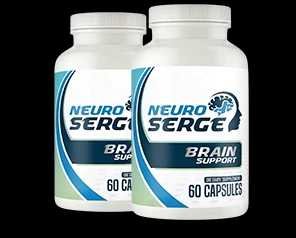
2 Bottles · 60-Day Supply
$79 / bottle
- ✓ Lowest-commitment option to try the formula
- ✓ Backed by the 180-day money-back guarantee
- ✓ Plus shipping (no free-shipping bonus at this tier)
Total: $158 + shipping

3 Bottles · 90-Day Supply
$69 / bottle
- ✓ The vendor’s advertised “most popular” tier
- ✓ Backed by the 180-day money-back guarantee
- ✓ Free US shipping + 3 bonus guides included
Total: $207 + free US shipping

6 Bottles · 180-Day Supply
$49 / bottle
- ✓ The lowest per-bottle price the vendor offers
- ✓ Backed by the 180-day money-back guarantee
- ✓ Free US shipping + 3 bonus guides included
Total: $294 + free US shipping
Prices and package details shown are pulled from currently available marketing sources and can change — click any package above to see live current pricing on the official order page.
If you are weighing the formula against its cost, the vendor’s listed prices at the time we checked (they can change) were $79 per bottle for the 2-bottle Starter package ($158 plus shipping), $69 per bottle for the 3-bottle package ($207 with free US shipping and three bonus guides), and $49 per bottle for the 6-bottle package ($294 with free US shipping), with a 180-day money-back guarantee.
What Are the Neuro Serge Ingredients, and Are They Proprietary?
A “proprietary blend” is a label format where a company lists ingredients under a single blend name with one total weight, hiding how much of each is inside. That is a common reason supplement labels are hard to evaluate. Neuro Serge does not do that: it names each of its seven ingredients individually. Our review counts that as a genuine point in its favor.
The problem is the next step. Naming an ingredient is not the same as disclosing its amount. According to our main review, none of the seven ingredients has a milligram dose on the official order page. So the transparency is partial: you know what is in it, but not how much, which is the information you need to compare it with research.
The vendor describes the roles of the ingredients this way, which we pass on as the manufacturer’s claims and not as established facts:
- Phosphatidylserine: protects brain cell membranes and supports memory formation.
- Thyme-leaved Gratiola (Bacopa monnieri): memory and new connections between brain cells.
- “Suprasine A” from Qian Ceng Ta: cell defense and anti-inflammatory support.
- Naringin: anti-inflammatory and antioxidant.
- GABA: relaxation, sleep quality and, as claimed, cell regeneration.
- Bilberry: antioxidant and protection from oxidative stress.
- EGCG (green tea extract): antioxidant, and, as claimed, stopping toxic protein buildup.
The page also says the capsules are vegetarian, non-GMO and free of gluten, preservatives and fillers, and that they are made in the USA and third-party tested. It does not name the manufacturer, facility or laboratory, so those statements cannot be independently confirmed from the page. This matters for ingredient quality: with supplements, the extract type, purity and testing are as important as the ingredient name.
A final framing point. A formula is more than the sum of its names. Many supplements list impressive ingredients in tiny amounts, a practice sometimes called “label dressing.” We are not saying Neuro Serge does that, because we cannot know. We are saying the label as published makes it impossible to rule out, which is why we keep returning to dose disclosure throughout this guide.
What Do Bacopa Monnieri and Phosphatidylserine Actually Do?
These two are the evidence anchors of the formula, and the main reason our review calls the ingredient list “not junk.”
Bacopa monnieri (Thyme-leaved Gratiola)
What it is: a creeping marsh plant used for centuries in traditional Indian medicine, now sold as a standardized extract. The sales page uses the common name “Thyme-leaved Gratiola,” which is a name for the same plant, so do not be thrown by it.
Evidence level: moderate for a herbal nootropic. Multiple randomized controlled trials, usually with standardized extracts taken daily for about eight to twelve weeks, have reported modest improvements in memory and learning measures in healthy adults. The effects are not dramatic, and they take time. Some of the research is in older adults, but most studies are small.
Cautions: the most frequently reported side effects are digestive: nausea, cramps, looser stools. Taking it with food helps some people. Because Bacopa is thought to influence acetylcholine signaling, it is sensible to ask a pharmacist before combining it with other memory or nervous-system medicines.
What we do not know: which extract, what percentage of active compounds, and how many milligrams per capsule. Studies show benefits at defined extract doses, so without these facts you cannot say whether Neuro Serge matches them.
Phosphatidylserine
What it is: a phospholipid, a fatty molecule that helps build the outer membrane of every cell, with high concentrations in brain cells. Your body makes some, and you get some from food.
Evidence level: modest and somewhat dated. Several older double-blind trials in older adults with age-related memory complaints reported benefits, but the research base is smaller than for Bacopa, and early work often used a source of the compound that is not the same as the plant-derived forms commonly sold today. So the findings do not transfer perfectly to a modern capsule.
Cautions: generally well tolerated in the studies. Some people report stomach upset or trouble sleeping at higher doses. If you have a soy allergy, ask what source is used, since some phosphatidylserine is soy-derived. The label does not say.
What we do not know: the source, the dose, and whether it matches those used in trials.
Together, these two ingredients are why our companion article Does Neuro Serge really work? concludes that the formula is plausible but unproven.
What Is “Suprasine A,” and Why Couldn’t We Identify It?
This is the most unusual line on the label, so we will be careful and specific about what is known and unknown.
What the label says: “Suprasine A from Qian Ceng Ta.” The vendor describes it as offering cell defense and anti-inflammatory support.
What we found: “Suprasine A” does not appear as a compound name in any supplement ingredient database, pharmacology reference or published research that we checked. That is the factual basis of the flag, and it is stated in our main review. It does not prove the ingredient is fake. It means we cannot verify what it is.
The plant clue: Qian Ceng Ta is the Chinese common name for Huperzia serrata, or Chinese club moss. That plant is best known as the natural source of Huperzine A, a compound studied mostly in China for memory support, including in some dementia-related research, through a mechanism that slows the breakdown of acetylcholine. That is the same broad mechanism as some prescription medicines used for Alzheimer’s disease.
Three possibilities: (1) “Suprasine A” may be a brand name for Huperzine A; (2) it may be a proprietary extract of the whole plant; or (3) it may be something else entirely. The vendor does not say which. We would be guessing if we chose one, so we will not.
Why it matters: an acetylcholinesterase-type compound is more pharmacologically active than a typical antioxidant. At appropriate amounts it may be reasonable for some people; at the wrong amounts, or alongside certain medicines, it could cause problems such as nausea, diarrhea, slowed heart rate or muscle twitching. Those effects are well described for this class of compound in general, not specifically for Neuro Serge. And if you take a prescription cholinesterase inhibitor for memory, adding another compound with the same kind of action is a conversation to have with your prescriber first. If you want help judging unfamiliar names, our guide to red flags in fake nootropic supplements explains why unverifiable ingredient names are worth pausing over.
What About Naringin, GABA, Bilberry and EGCG?
The remaining four ingredients are recognizable, but their link to memory is weaker than that of Bacopa and Phosphatidylserine. They are best understood as supporting players.
Naringin
Naringin is a flavonoid that gives grapefruit and other citrus fruits their slightly bitter taste. Research on it comes largely from laboratory and animal studies, suggesting antioxidant and anti-inflammatory activity, with limited human cognitive trials. People who have been told to avoid grapefruit because of a medication should mention naringin to their pharmacist, because grapefruit interactions are a well-known issue, even though they are mainly attributed to other grapefruit compounds.
GABA
GABA, or gamma-aminobutyric acid, is the brain’s main calming neurotransmitter. Whether GABA taken by mouth gets into the brain in meaningful amounts is scientifically disputed, so most human studies point to relaxation or stress-related effects instead of direct memory improvement. The vendor claims it helps sleep quality and cell regeneration; we found nothing that supports the regeneration claim. If you take sedatives or drink alcohol regularly, mention GABA to your pharmacist, because added drowsiness is a reasonable concern.
Bilberry
Bilberry is a dark berry related to the blueberry, rich in anthocyanin pigments. It has been studied mostly for eye and blood-vessel health, not memory. As an antioxidant ingredient it is gentle and widely used, but the cognitive evidence is limited, and extract strength matters.
EGCG
EGCG (epigallocatechin gallate) is the best-known polyphenol in green tea. It has a very large research base as an antioxidant, plus preclinical work on pathways related to amyloid, but human data on actual memory outcomes is mixed and thin. The claim that it “stops toxic protein buildup” goes beyond what the human evidence shows. One practical caution: concentrated green tea extracts at high doses have been linked in rare cases to liver problems, which is one reason the missing dose matters. Our review describes the formula as stimulant-free, so caffeine content is not the main concern here.
Why Does the Missing Dose Information Matter So Much?
In nutrition, the difference between a helpful amount and a useless one is often large. Bacopa studies use defined extract doses. Phosphatidylserine studies use defined daily amounts. If a capsule contains far less than those amounts, the research does not apply, and if it contains much more, safety questions grow.
For a product like this one, four practical problems follow from undisclosed doses:
- You cannot compare with the research. The evidence for the two stronger ingredients is dose-specific.
- You cannot compare products. A competitor that prints amounts can be matched against studies; this one cannot.
- You cannot check your total intake. If you already take green tea extract, a multivitamin or other memory supplements, you cannot tell how much overlap there is.
- You cannot give your pharmacist full information. The most useful question a pharmacist can ask is “how much?”
The fix is easy for the company, which is one reason our review calls it one of the clearest and most fixable transparency issues. If you decide to buy, you can ask customer support for the amounts per capsule, and you can compare what you receive with the label on the bottle, which our review notes should carry the directions. We cannot promise the company will supply dose details.
Neuro Serge Ingredients at a Glance
| Ingredient | What it is | Memory evidence in humans | Dose disclosed? |
|---|---|---|---|
| Bacopa monnieri (Thyme-leaved Gratiola) | Herbal extract | Moderate; modest benefits over 8 to 12 weeks in trials | No |
| Phosphatidylserine | Cell membrane phospholipid | Modest; older trials in age-related memory complaints | No |
| “Suprasine A” (Qian Ceng Ta) | Unidentified; source plant linked to Huperzine A | Cannot be assessed | No |
| Naringin | Citrus flavonoid | Limited; mostly preclinical | No |
| GABA | Calming neurotransmitter | Disputed brain access; relaxation effects more likely | No |
| Bilberry | Anthocyanin-rich berry | Limited; mostly eye and vascular research | No |
| EGCG | Green tea polyphenol | Mixed and thin | No |
Reading the table, you can see why we describe the formula as having a credible core (two ingredients), a supporting cast (four ingredients with limited human memory data) and one unknown. That is a more balanced description than either the vendor’s claims or a flat dismissal would give.
What Cautions and Medication Questions Apply?
The main review says most of the named ingredients are commonly used and generally considered safe for most healthy adults, with the exception of the unidentified ingredient, which deserves extra care if it is a Huperzine A-type compound. Our practical guidance:
- Tell your pharmacist or doctor first if you take prescription medicines, especially drugs that act on the nervous system, memory medicines, sedatives, heart-rate medicines or blood thinners. Not because we know of a specific problem with each, but because the unknowns in this label are exactly the kind a professional should see.
- Bring the bottle. The label that ships with the product, which carries the directions, is more useful to a professional than the sales page.
- Be extra careful if pregnant or nursing, or if you have liver, heart or kidney conditions.
- Watch for side effects such as nausea, diarrhea, dizziness, unusual drowsiness, a slow pulse or muscle twitching, and stop and speak to a clinician if they appear.
- Do not use it as a substitute for evaluation. Sudden memory change, confusion or steadily worsening memory loss needs a doctor, not a supplement.
It is also worth ruling out simple, treatable causes of poor memory before trying anything: see our overview of brain fog causes for a list that includes sleep, medicines, thyroid, mood and nutrient levels.
What Should You Look for on a Transparent Nootropic Label?
You can use the following checklist on Neuro Serge and on any other brain supplement, including formulas we review such as Phytomem One.
- A dose for every active ingredient, in milligrams or micrograms, not just a total blend weight.
- The extract type and standardization, for herbs: for example, the plant part and the percentage of active compounds.
- Recognizable names. Each ingredient should be findable in a reputable reference. Invented-sounding trademarked names should come with an explanation of what they are.
- A named manufacturer and facility, with a real address and quality standards.
- Named third-party testing, ideally with a certificate you can look up, not just the phrase “lab tested.”
- Doses in line with research. If a study used a defined amount, the label should be in that neighborhood.
- Sensible claims. Support, not cure. Anything about reversing memory loss is a red flag.
- Allergen and source information, for example soy, gluten and animal-derived ingredients.
- Clear directions and warnings, including who should check with a doctor first.
Measured against that checklist, Neuro Serge meets the first “named ingredients” standard in spirit and, according to the review, misses on most of the others in the form we could see. That is the core of our assessment, and we explain how it shapes the overall legitimacy question in Is Neuro Serge a scam? If you want to know how real buyers tend to react to these gaps, see Neuro Serge reviews and complaints.
Frequently Asked Questions
What are the ingredients in Neuro Serge?
Phosphatidylserine, Thyme-leaved Gratiola (Bacopa monnieri), “Suprasine A from Qian Ceng Ta,” Naringin, GABA, Bilberry and EGCG. All seven are named, but none has a disclosed dose.
What is Suprasine A?
We do not know. It is not a compound name we could find in the ingredient databases and literature we checked. Its stated source plant, Qian Ceng Ta, is linked to Huperzine A, but the vendor does not confirm that.
Is Suprasine A the same as Huperzine A?
It might be, but this cannot be confirmed from the information the vendor gives, so we do not treat it as a fact.
Is Thyme-leaved Gratiola the same as Bacopa monnieri?
Yes. The sales page uses Thyme-leaved Gratiola as a common name for Bacopa monnieri, a well-studied herbal ingredient.
Are the Neuro Serge ingredients safe?
Most are commonly used and generally considered safe for most healthy adults, but the unidentified ingredient and the missing doses make safety harder to judge. Check with your doctor or pharmacist, especially if you take medicines or have a medical condition.
Does Neuro Serge contain caffeine?
Our review describes it as a stimulant-free formula. If caffeine sensitivity is a concern, check the label that ships with the product.
Which Neuro Serge ingredient has the most evidence?
Bacopa monnieri, followed by Phosphatidylserine. Even there, the evidence is modest and dose-specific, and the dose in Neuro Serge is unknown.
Can I find out the doses?
Not from the official order page, according to our review. Check the label on your bottle if you buy, and ask customer support, though we cannot say whether they will share the amounts.
Our Take
The Neuro Serge ingredients are a mixed bag in an honest sense: a credible core of Bacopa monnieri and Phosphatidylserine, four supporting ingredients whose memory benefits are mostly unproven in people, and one name we could not identify. Combine that with undisclosed doses and a lack of verifiable trials, and the formula is better described as plausible than as proven.
If you try it, do so knowing that you are accepting an information gap. Ask your pharmacist about any medicines you take, keep your expectations modest, and use the 180-day guarantee as your safety net. If you want a more complete picture before deciding, Does Neuro Serge work? covers the efficacy question directly.
Related reading: Neuro Serge reviews and complaints, Is Neuro Serge a scam?, and our general guide on how to tell if a brain supplement is working.
Disclosure: we may earn a commission if you buy through our links, at no extra cost to you, and it does not change our assessment.