Does Phytomem One Really Work? An Evidence-Based Look at the Science
Does Phytomem One Really Work? An Evidence-Based Look at the Science
“Does Phytomem One work?” is the single most common question people ask before buying any nootropic supplement, and it deserves a more careful answer than a marketing page can give. Rather than repeating the sales pitch, this piece walks through the actual peer-reviewed research behind each major mechanism Phytomem One claims to target — microplastic exposure in brain tissue and brain insulin resistance (informally called “Type 3 Diabetes”) — and shows you exactly where the science is strong, where it’s promising-but-early, and where the marketing gets ahead of the data.
If you want the short version: Phytomem One combines ingredients with genuinely differentiated, published research behind their individual mechanisms, but there is no clinical trial of the finished 10-ingredient formula itself. That’s the same position nearly every over-the-counter supplement is in, and it means “does it work” really breaks down into two separate questions: does the underlying science make sense, and has anyone tested this exact product on real people. We’ll address both.
The Two Claims Phytomem One Is Built Around
Before getting into individual ingredients, it helps to understand the two big-picture claims the product rests on, because they come from genuinely different bodies of research with different levels of maturity.
Claim 1: Microplastics Are Accumulating in Human Brain Tissue
This part is not marketing exaggeration — it’s an active and rapidly growing area of environmental health research. Studies published in the past several years have detected microplastic particles in human brain tissue samples, including research that made headlines for finding measurable concentrations of plastic particles in brain samples from deceased individuals. This research is real, recent, and concerning enough that it’s being taken seriously by toxicologists and public health researchers.
What’s NOT yet established is what level of harm this causes, how it happens over time, or — critically for a product like Phytomem One — whether any dietary supplement ingredient can meaningfully reduce or reverse microplastic accumulation in brain tissue. The “Plastic Stranglehold” language is a dramatized marketing name for a real phenomenon, but the leap from “microplastics are in brain tissue” to “this supplement clears them out” is not something current research supports with direct evidence. The ingredients marketed for this purpose (saffron, fucoxanthin, fucoidan, oleuropein) have anti-inflammatory and antioxidant properties studied in other contexts, which is a reasonable hypothesis to explore, but hypothesis is different from proof.
Claim 2: Brain Insulin Resistance (“Type 3 Diabetes”)
This term has actually been used in the neuroscience research literature since the mid-2000s, most prominently in Alzheimer’s research exploring the connection between insulin signaling problems in the brain and cognitive decline. It is not an officially recognized clinical diagnosis (you won’t get a “Type 3 Diabetes” diagnosis code from a doctor), but the underlying concept — that impaired glucose metabolism in brain cells may contribute to cognitive decline — has a more substantial research base than the microplastics angle, including studies connecting insulin resistance, metabolic syndrome, and dementia risk.
This is actually the stronger scientific leg Phytomem One stands on, because several of its ingredients (berberine, Ceylon cinnamon, banaba leaf/corosolic acid) have real, replicated human research showing they improve insulin sensitivity and glucose metabolism — just not specifically measured in brain tissue in those studies.
Ingredient-by-Ingredient: What the Research Actually Says
Here’s where the evidence-based review gets specific. We looked at each of the 10 named ingredients and categorized the strength of evidence behind its claimed mechanism.
Strong, Replicated Human Evidence
Berberine HCl has arguably the best-studied mechanism of any ingredient in this formula. Multiple randomized controlled trials have examined berberine’s effects on blood glucose, insulin sensitivity, and lipid profiles, generally with meaningful, reproducible results. Its mechanism — activating AMPK, an enzyme that regulates cellular energy metabolism — is well understood at a biochemical level. The caveat: this research is about metabolic health broadly, not brain-specific cognitive outcomes, so applying it to “brain fuel restoration” is a reasonable extrapolation rather than direct proof.
Ceylon cinnamon (Cinnamomum verum) has a decent body of human trials on insulin sensitivity and blood sugar, though effect sizes vary study to study and some trials show no significant effect, which is typical for a spice-derived supplement with variable extract concentrations between products.
Moderate, Smaller-Scale Human Evidence
Saffron extract has several small-to-moderate randomized trials, primarily in the context of mood and mild cognitive concerns, generally showing modest positive effects compared to placebo. Sample sizes tend to be in the dozens to low hundreds, which is enough to be encouraging but not enough to be definitive the way a large Phase 3 pharmaceutical trial would be.
Banaba leaf (corosolic acid) has human research on blood glucose management, generally smaller and older studies than the berberine literature, with a plausible but less thoroughly characterized mechanism.
Early-Stage, Mostly Preclinical Evidence
Fucoxanthin and fucoidan (both derived from brown seaweed) have a growing body of cell-culture and animal research on metabolic and neuroprotective effects, but human clinical data specific to cognition is thin. Fucoxanthin’s better-established human research is actually in weight management, not brain health.
Kudzu flower extract has research (including studies from Chinese universities) on glucose uptake, largely in animal models or isolated tissue studies rather than large human trials.
Morosil (Sicilian red orange extract) has published research on metabolic markers, but a meaningful share of that research comes from sources connected to the ingredient’s manufacturer/patent holder, which doesn’t invalidate the findings but does mean it’s worth weighing alongside independent replication, which is more limited.
Oleuropein (olive leaf) has broader research support in the context of Mediterranean-diet cardiovascular research, with blood-sugar and antioxidant effects reasonably well documented, though again not brain-tissue-specific.
The Role of Bioavailability: Why Morosil and Xylitol Matter More Than They Sound
One detail that’s easy to overlook in an ingredient-by-ingredient breakdown is bioavailability — how much of an active compound your body actually absorbs and uses, versus how much passes through unused. This matters enormously for evaluating “does it work” claims, because a supplement can contain a research-backed ingredient at a research-backed dose and still underperform if the formulation doesn’t help your body absorb it.
Morosil, the Sicilian red orange extract Phytomem One positions as its “hero” ingredient, is marketed specifically around this bioavailability angle — the claim is that it enhances how well your body absorbs the other nine ingredients in the formula. There is published research on Morosil’s own metabolic effects (inflammatory markers, waist circumference in supplementation studies), but independent, ingredient-agnostic research specifically confirming its role as a bioavailability enhancer for other unrelated compounds is more limited than the marketing framing suggests. This is a common pattern in the supplement industry: a genuinely researched ingredient gets an additional marketing claim (in this case, “enhances everything else in the formula”) that goes beyond what’s been independently verified.
Xylitol’s inclusion is more straightforwardly explainable: it’s a sugar alcohol that doesn’t spike blood glucose the way regular sugar does, which fits logically with a formula built around blood-sugar and insulin-sensitivity themes, functioning more as a low-glycemic binder/filler than an active cognitive ingredient in its own right.
The Placebo Question: An Honest Complication
Any honest evidence-based review of a cognitive supplement has to address the placebo effect directly, because subjective measures like “mental clarity” and “focus” are particularly susceptible to it. Clinical trials for cognitive and mood-related supplements routinely show meaningful placebo response rates — it’s part of why rigorous trials require a placebo control group in the first place, and part of why individual testimonials (including the ones on Phytomem One’s own sales page) can’t be treated as reliable evidence of a product’s effect, positive or negative.
This isn’t a reason to dismiss the possibility that Phytomem One could genuinely help some people — the ingredient-level mechanisms discussed above are real biochemistry, not fiction. It’s a reason to be appropriately skeptical of dramatic personal testimonials (from any brand, not just this one) and to lean on the tracking approach described below rather than vibes alone when deciding whether it’s working for you specifically.
What Would It Take to “Prove” Phytomem One Works?
This is worth explaining because it clarifies what’s realistic to expect from any supplement in this category, not just this one. A truly rigorous answer to “does Phytomem One work” would require a randomized, double-blind, placebo-controlled trial of the actual finished formula, in a large enough group of people, measuring standardized cognitive outcomes (memory recall tests, processing speed, etc.) over a period of months, ideally replicated by an independent research team not affiliated with the manufacturer. That kind of trial costs millions of dollars and takes years — it’s the standard applied to pharmaceutical drugs, and the supplement industry, which operates under a different regulatory framework (DSHEA in the US), essentially never meets that bar for finished products, regardless of brand.
That’s not a defense of vague marketing claims — it’s context for why “no clinical trial on the finished product” describes nearly every nootropic supplement on the market, not a unique red flag specific to Phytomem One. The more useful question for a buyer is the one this article has focused on: is the ingredient list built from components with real, individually-studied mechanisms, dosed transparently, from a company willing to back the purchase with a genuine refund policy? On those specific points, Phytomem One holds up reasonably well compared to many competitors that rely on proprietary blends and dramatic claims with even less individual-ingredient research behind them.
How to Actually Evaluate Whether It’s Working For You
Since there’s no lab test that tells you “your Phytomem One is working,” the practical approach is to track subjective and semi-objective markers over the 60-day guarantee window rather than relying on how you feel on any single day.
- Keep a simple daily log. Note your energy, focus, and any moments where you noticed (or didn’t notice) mental fog, rated 1-10, for at least 4-6 weeks before drawing conclusions.
- Control other variables where you can. Sleep quality, caffeine intake, and stress levels affect cognitive performance at least as much as any supplement, so try to keep those reasonably stable during your evaluation window so you’re not confusing other changes with the supplement’s effect.
- Use a concrete task as a benchmark. Something like a simple memory game, a crossword completion time, or even how often you lose your train of thought in conversation gives you a more objective marker than a general “do I feel sharper” impression.
- Give it the full window. Nutrient-based, non-stimulant supplements generally need weeks of consistent use before any cumulative effect would be expected to show up, which is exactly why the 60-day guarantee matters more than a shorter return policy would.
If you track honestly for 6-8 weeks and don’t notice a meaningful difference by your own benchmarks, that’s useful information — and it’s exactly the scenario the money-back guarantee exists for.
Red Flags to Watch For (And Why Phytomem One Mostly Avoids Them)
When evaluating whether any brain supplement “works,” it helps to know the common red flags across the industry, and to check whether the product in question shows them:
- Proprietary blends that hide dosing: Phytomem One avoids this — every ingredient is individually named, which at least lets you research the specific compounds and doses involved.
- Claims of instant, dramatic results: The marketing does lean into dramatic before/after narrative language, which is a soft yellow flag, though it doesn’t promise literal overnight results.
- No refund policy or a very short window: Phytomem One’s 60-day guarantee is on the longer end for this category, which is a point in its favor.
- Fabricated or unverifiable scientific citations: The mechanisms referenced (AMPK activation, insulin receptor sensitivity, neuroinflammation) are real, established areas of biochemistry, even if the finished-product claims built on top of them outrun the specific evidence.
- Pressure tactics like fake countdown timers or “only 3 left” scarcity messages: Worth checking on the current order page, since these are common manipulation tactics across the supplement industry generally.
The Bottom Line on “Does It Work”
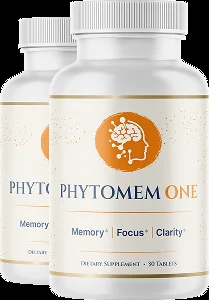
2 Bottles · 60-Day Supply
$79 / bottle
- ✓ Save $40 vs. single-bottle price
- ✓ Backed by the 60-day money-back guarantee
- ✓ Includes all 3 free bonus guides
Total: $158 + shipping
3 Bottles · 90-Day Supply
$59 / bottle
- ✓ The vendor’s advertised best-savings tier
- ✓ Backed by the 60-day money-back guarantee
- ✓ Free US shipping + all 3 bonus guides
Total: $177 + free US shipping
6 Bottles · 180-Day Supply
$49 / bottle
- ✓ The lowest per-bottle price the vendor offers
- ✓ Backed by the 60-day money-back guarantee
- ✓ Free US shipping + all 3 bonus guides
Total: $294 + free US shipping
Prices and package details shown are pulled from currently available marketing sources and can change — click any package above to see live current pricing on the official order page.
Based on the available evidence, Phytomem One is built from ingredients with a reasonable, if uneven, scientific foundation — strongest on the metabolic/blood-sugar side (berberine, cinnamon, banaba), more speculative on the microplastic-clearing side (saffron, fucoxanthin, fucoidan). Whether it “works” for your specific memory and focus concerns is something only a personal 6-8 week trial, backed by the refund guarantee, can actually answer — no article, including this one, can promise a result the underlying research doesn’t support.
What we can say confidently is that this isn’t a product built on fabricated science or hidden ingredients. It’s a product built on real, if early-stage and partially-extrapolated, research — which puts the decision back where it belongs: with you, your specific health situation, and a fair, time-boxed test using the guarantee period as your safety net.
Frequently Asked Questions
Has Phytomem One been clinically tested?
The finished formula has not been through an independent, published clinical trial. Several of its individual ingredients have been studied in human trials for related outcomes (blood sugar, mood, inflammation), which is common practice across the supplement industry.
Is the “Plastic Stranglehold” claim real science or just marketing?
The underlying finding — microplastics detected in human brain tissue — is real, published research. The specific claim that Phytomem One’s ingredients clear that buildup is a marketing extrapolation not yet confirmed by direct clinical evidence.
How is “Type 3 Diabetes” different from regular diabetes?
It’s an informal term some researchers use to describe insulin resistance specifically in brain tissue, distinct from Type 1 or Type 2 diabetes, which affect blood sugar regulation body-wide. It is not a formal diagnosis you’d receive from a doctor.
Should I try Phytomem One if I want to see real results?
If you want a stimulant-free, transparently-dosed nootropic with legitimate (if not definitive) research behind its ingredients and a genuine refund window to test it risk-free, it’s a reasonable option to evaluate for yourself using the tracking approach described above.
Why doesn’t the FDA require proof that supplements work before they’re sold?
Under the U.S. Dietary Supplement Health and Education Act (DSHEA), supplements are regulated differently than pharmaceutical drugs. Manufacturers aren’t required to prove efficacy through clinical trials before selling a product, provided they don’t make specific disease-treatment claims (which is why you’ll see careful language like “supports” rather than “cures” or “treats” on compliant supplement marketing). This is standard across the entire industry and isn’t unique to Phytomem One — but it’s exactly why doing independent research, as this article aims to do, matters more than trusting sales copy alone.
Is there a difference between “clinically studied ingredients” and a “clinically studied product”?
Yes, and this distinction is at the heart of evaluating any supplement’s evidence base. “Clinically studied ingredients” means individual components have been tested, often in isolation and often at different doses than what’s in the final product. “Clinically studied product” would mean the exact finished formula, at its actual doses, was tested as a whole. Phytomem One, like the large majority of its competitors, falls into the first category rather than the second — which is worth knowing rather than assuming the ingredient-level research automatically transfers to the finished product’s specific claims.
Read our full Phytomem One review for complete pricing, ingredient details, and our overall verdict. For an honest look at customer testimonials and disclosure issues, see our review of Phytomem One reviews and complaints, and for a full ingredient-by-ingredient breakdown, see what’s in Phytomem One.