TitanFlow Reviews From Real Users
Before you take any single review at face value — good or bad — it helps to know how to read supplement reviews critically in the first place, because this category is unusually prone to both fake five-star praise and copy-pasted one-star complaints from review farms. This piece pulls together the patterns that actually show up across TitanFlow’s publicly visible customer reviews (Amazon listings and independent retailer/review sites), what those patterns are worth trusting, and what to watch for. It complements our full TitanFlow review, which covers pricing, ingredients, and the company’s business record in depth.
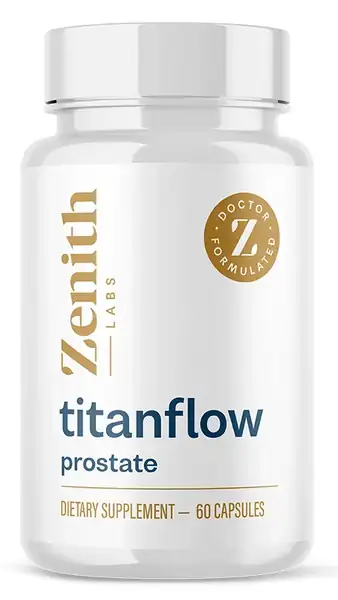
1 Bottle · 30-Day Supply
$59 / bottle
- ✓ Try it before committing to a bundle
- ✓ 180-day money-back guarantee
- ✓ $9.95 shipping, one-time payment
Total: $68.95 shipped
3 Bottles · 90-Day Supply
$49 / bottle
- ✓ Enough for a full 90-day evaluation window
- ✓ 180-day money-back guarantee
- ✓ Free U.S. shipping, one-time payment
Total: $147 shipped
6 Bottles · 180-Day Supply
$39 / bottle
- ✓ Save $120 vs. buying 6 singly
- ✓ 180-day money-back guarantee
- ✓ Free U.S. shipping, one-time payment
Total: $234 shipped
Prices and package details shown are pulled from currently available marketing sources and can change — click any package above to see live current pricing on the official order page.
A Word on How We Approached This
We did not purchase TitanFlow ourselves to generate a first-person account for this piece — that’s covered honestly in our main review’s disclosure. What follows instead is a synthesis of recurring themes across TitanFlow’s publicly available customer reviews: verified-purchase feedback on its Amazon listing and commentary referenced across independent third-party review coverage. We’re intentionally not inventing or paraphrasing specific individual quotes we can’t verify, because fabricated testimonials are exactly the kind of dishonest practice this site refuses to engage in. Instead, this is an honest summary of the sentiment patterns that repeat often enough across public sources to be worth reporting as trends, alongside the caveats that any such synthesis deserves. As always, individual results with any supplement vary, and one person’s review — positive or negative — is one data point, not a guarantee of your own experience.
The Positive Themes That Show Up Most Often
Across public reviews, a handful of positive themes recur consistently enough to be worth taking seriously. The most common is a reported reduction in nighttime bathroom trips after several weeks of consistent use — this is the single most-mentioned specific outcome, and it lines up with what the ingredient research (particularly on pygeum and beta-sitosterol) would predict as a plausible, modest effect. A second recurring theme is appreciation for the ingredient transparency: reviewers who’ve tried other “proprietary blend” prostate supplements specifically call out being able to see the exact dose of everything they’re taking. Third, the long guarantee window comes up often as a reason people were comfortable trying it in the first place, even among reviewers who ultimately weren’t sure it made a difference — a 180-day window removes most of the financial risk of testing it.
It’s worth being honest about the limits of this kind of positive pattern, too. Self-reported improvement in symptoms like urinary frequency is subject to real placebo effects, natural symptom fluctuation, and the simple fact that people who felt no benefit are statistically less likely to leave a review at all than people who feel they got something out of a purchase — a well-documented bias in all consumer review ecosystems, not specific to TitanFlow.
The Negative Themes and Complaints Worth Knowing
On the other side, several complaint patterns show up often enough to flag directly. The most common is simply “no noticeable difference” after the trial period — a meaningful number of reviewers report using it for the recommended 60–90 days and not perceiving a change worth the cost, which is consistent with the fact that this is a modestly-dosed supplement rather than a clinically proven treatment. Second, some reviewers report mild digestive side effects — bloating, nausea, or a lingering aftertaste — consistent with pumpkin seed oil supplements generally rather than something unique to this formula. Third, and worth taking seriously: multiple sources reference confusion or frustration around billing and subscription terms, which lines up with something our own research also flagged — Zenith Labs’ marketing materials are inconsistent about whether packages are one-time purchases or auto-renewing subscriptions. If you decide to order, read the checkout page closely before confirming.
A smaller but recurring complaint comes from reviewers dealing with more advanced or diagnosed BPH, who report limited or no relief — which again lines up with the honest assessment that this is a general wellness supplement aimed at mild-to-moderate, largely age-related symptoms, not a substitute for prescription-strength treatment of a diagnosed condition.
How to Read Prostate Supplement Reviews Critically
This category — prostate and men’s health supplements sold through affiliate marketing — is one of the most heavily gamed corners of the review ecosystem, on both ends. A few practical red flags worth knowing, whether you’re reading reviews of TitanFlow or any competitor:
Watch for reviews that read like ad copy rather than a personal account — phrases lifted almost verbatim from a product’s own marketing page, unnaturally specific percentage claims (“87% improvement”), or a suspicious number of five-star reviews posted in a short time window are all hallmarks of incentivized or fabricated reviews rather than genuine customer experiences. On the flip side, be equally skeptical of overwhelming pile-on negativity that appears suddenly, since this category also attracts coordinated “scam” narratives from competing affiliates trying to redirect traffic to a rival product — a dynamic that’s common enough in supplement marketing to be worth naming directly. A cluster of near-identical reviews, in either direction, posted within days of each other is a more reliable warning sign than the star rating itself.
The most trustworthy signal, generally, is Amazon’s “Verified Purchase” tag combined with a review that includes specific, unremarkable, plausible detail — a mention of a specific number of weeks, a comparison to a previous product tried, or a description of a modest and specific change — rather than sweeping claims in either direction. Reviews that acknowledge uncertainty (“not sure if it’s this or something else I changed”) tend to be more trustworthy than reviews claiming dramatic, unambiguous transformation, simply because that’s how honest self-assessment of a mild-effect supplement actually reads.
Where TitanFlow Reviews Actually Live, and Why the Source Matters
Not all “reviews” of a supplement come from the same place, and treating them as interchangeable is a mistake. TitanFlow’s review footprint splits into a few distinct categories, each with a different reliability profile worth understanding before you weigh any of them.
Amazon Verified Purchase reviews carry the most weight, because Amazon requires the reviewer to have actually bought the product through the platform, which filters out a large share of fabricated reviews (though not all — incentivized reviews and review-swap schemes still exist even on Amazon, just less commonly than elsewhere). When you’re evaluating star ratings and specific complaints, this is the source worth weighting most heavily, and it’s also where the “no noticeable difference” and mild-digestive-side-effect themes show up most consistently, since Amazon’s review format tends to attract more measured, specific feedback than marketing-adjacent sites.
Independent review and comparison sites — the kind that rank prostate supplements against each other — are a mixed bag. Some genuinely test and compare products; a large share are themselves affiliate sites earning commission on whichever product they rank highest, which creates an obvious incentive problem worth being aware of (a bias this site addresses directly in its own affiliate disclosure, since the same conflict of interest technically applies to us). The practical takeaway: treat “Editor’s Choice” or “#1 Ranked” badges on comparison sites with real skepticism, and look instead at whether a given site discloses specific dosages, cites actual studies, and is willing to name real drawbacks — the presence of a clearly stated “cons” section, like the one in our own review, is a reasonable signal of good-faith reporting versus pure sales copy.
Forum and community discussion (health forums, general wellness communities) tends to be the most candid source, precisely because there’s no commission at stake, but it’s also the least structured — you’re relying on scattered anecdotes rather than any systematic sample, and popular forum threads about a specific product are often dominated by whoever posts first or most, not necessarily by a representative range of experiences.
Is TitanFlow a Scam, Based on What Reviewers Say?
This specific question comes up often enough in searches that it’s worth addressing directly, separate from the ingredient-and-dosing analysis covered elsewhere. Based on the pattern of public reviews and available company information, TitanFlow does not show the classic hallmarks of an outright scam: it’s sold by an identifiable, longstanding company (Zenith Labs) with other products in its catalog, it discloses its full ingredient list and exact doses rather than hiding behind a proprietary blend, and it backs every package with a genuinely long 180-day guarantee that the company states applies even after the product has been used — a policy that would be financially reckless for a company running a pure scam operation, since it would simply refund every unhappy customer at scale.
What legitimate criticism does exist — underdosing on two of five ingredients relative to cited research, no clinical trial on the finished formula, an F rating with the Better Business Bureau, and inconsistent subscription-versus-one-time-purchase language — is real and worth taking seriously, but it describes a supplement with genuine, documented shortcomings rather than a fraudulent product. “Not as strong as its marketing implies” and “a scam” are meaningfully different conclusions, and the evidence here supports the former, not the latter, which is exactly the kind of nuance that gets lost in both five-star sales pages and one-star pile-on threads.
What the Better Business Bureau Record Adds to the Picture
Separate from product reviews, it’s worth knowing that Zenith Labs, the company behind TitanFlow, currently holds an F rating with the Better Business Bureau, tied to two unresolved customer complaints on file. This is a company-level data point rather than a product-quality one — it speaks more to customer service responsiveness than to whether the ingredients themselves are effective — but it’s exactly the kind of context that individual product reviews (positive or negative) rarely surface, and it’s worth weighing alongside the sentiment patterns above, especially given the checkout-terms confusion some reviewers report.
What a Reasonable Trial Looks Like, Based on What Reviewers Report
Pulling together the patterns above into something actionable: reviewers who report the clearest sense of whether TitanFlow did anything for them tend to share a few common habits, regardless of which way their conclusion went. They took it consistently, at the labeled two-capsules-daily dose, for at least 60 days before forming a judgment — shorter trials in the review data are disproportionately inconclusive (“too soon to tell”) rather than clearly negative or positive. They tracked something concrete, even informally — a rough count of nighttime bathroom trips, for instance — rather than relying on a general sense of feeling different, which is notoriously unreliable for gradual, modest changes. And they went in with the ingredient-level evidence in mind rather than the marketing framing, which meant a “modest reduction in urgency” registered as a genuine, worthwhile result rather than a disappointment relative to an unrealistic bar.
This is also where the guarantee genuinely does its job well: reviewers who found the 60–90 day trial wasn’t producing results were, per the terms Zenith Labs publishes, able to request a refund within the 180-day window — well beyond the evaluation period itself. Several complaint-pattern reviews specifically mention successfully using the guarantee, which is at least some evidence that the return policy functions as advertised rather than being a marketing-only promise, though we’d note that a company’s own advertised refund success doesn’t fully substitute for independently audited fulfillment data, which isn’t publicly available for a private supplement company like Zenith Labs.
Red Flags to Watch for in Any TitanFlow-Adjacent Content
Because TitanFlow is sold through affiliate marketing, a wide range of sites — including this one — earn a commission if you buy through their link. That’s a disclosed conflict of interest here, and it should make you appropriately skeptical of any single source, including ours. A few specific things worth watching for across the broader content ecosystem around this product: pages that show a countdown timer claiming a limited-time discount that resets every time you reload the page (a manipulative and dishonest tactic we deliberately avoid on this site); pages that claim a specific named doctor or medical institution has “endorsed” TitanFlow, when the actual claim is usually that general research from that institution supports the broader ingredient category, not the specific product; and comparison articles that rank five or six competing products with suspiciously similar, superlative-heavy language for each one, which is a strong sign of templated affiliate content rather than genuine independent testing.
Frequently Asked Questions
Are TitanFlow’s reviews trustworthy?
Like most products sold through affiliate marketing, TitanFlow’s public reviews include a mix of genuine customer experiences and some marketing-adjacent noise. Weighting Verified Purchase reviews with specific, modest, plausible detail more heavily than sweeping five-star or one-star claims is the most reliable approach.
What’s the single most common complaint?
“No noticeable difference” after the trial period is the most frequently repeated negative theme, alongside occasional confusion about subscription versus one-time-purchase billing terms.
What’s the single most common praise?
A reported reduction in nighttime bathroom trips after several weeks of consistent use is the most commonly repeated positive outcome across public reviews.
Does a long money-back guarantee mean the reviews should be more positive?
Not necessarily — a guarantee reduces financial risk, which is why it comes up positively in reviews, but it doesn’t change whether the product produces a noticeable physiological effect for a given individual.
Should I trust a review claiming dramatic, fast results?
Be skeptical of any prostate supplement review — for TitanFlow or a competitor — claiming a fast, dramatic transformation. The ingredient research behind formulas like this one supports modest effects over 60–90 days at best, not rapid or dramatic change.
Do negative reviews mean the ingredients don’t work?
Not necessarily. Individual response to plant-based compounds varies, symptom severity differs widely between reviewers, and some negative reviews reflect people with more advanced BPH than this type of formula is realistically suited to help — rather than a flaw in the ingredients themselves.
Where should I look first if I want to read reviews myself?
Amazon’s Verified Purchase reviews are the most reliable single source to start with, since they require an actual platform purchase and tend to include more specific, measured, and genuinely useful detail than marketing-adjacent comparison sites typically offer.
Our Take
The honest pattern across TitanFlow’s public reviews looks like what you’d expect from a transparently-dosed, moderately-effective supplement rather than either a miracle fix or a scam: real reports of modest improvement in mild symptoms after weeks of consistent use, real complaints from people who noticed nothing, occasional mild digestive side effects, and legitimate frustration over unclear subscription terms that’s worth double-checking before you order. None of that is unusual for this product category — it’s just rarely reported this plainly. For the ingredient science behind why some reviewers see modest results and others see none, read our full ingredient breakdown, or see our deep dive into whether TitanFlow actually works for the research-level analysis.