Balance Exercises for Seniors
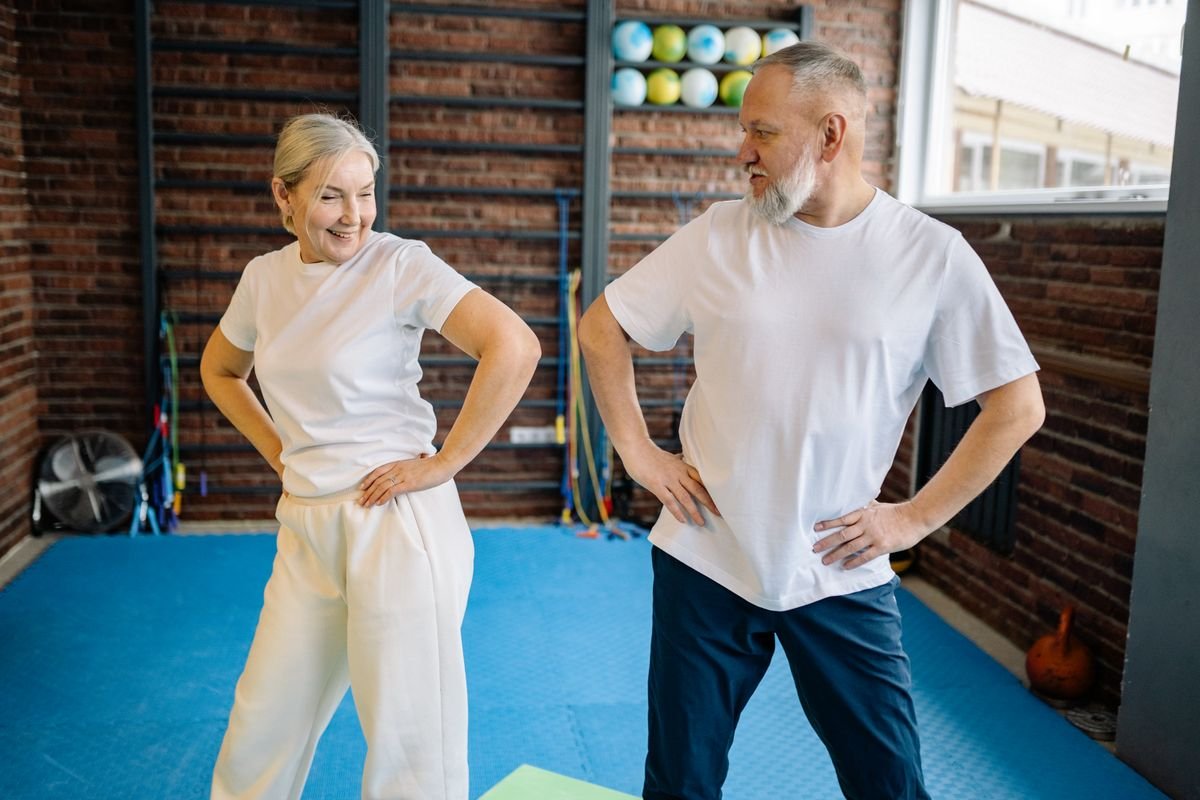
Good balance exercises for seniors are one of the most evidence-backed, low-cost tools available for staying independent and active later in life — and yet balance training tends to get far less attention than strength or cardio when people think about fitness after 50. That’s worth correcting, because falls are the leading cause of injury among older adults, and more than one in four adults aged 65 and older falls each year, according to the CDC, though fewer than half ever mention it to a doctor. The encouraging part of that statistic is that balance is a trainable skill, not a fixed trait that only declines with age. This guide covers why balance changes as we get older, the specific exercises with the most support behind them, and how to build a simple, safe routine that fits into daily life.
Quick answer: The most effective balance exercises for seniors combine static balance holds (standing with feet together, then on one foot, progressing to eyes closed), dynamic movements (heel-to-toe walking, standing marches, side steps), and functional strength work (sit-to-stand from a chair, calf raises, hip strengthening). Most guidance recommends practicing balance exercises at least 2–3 times per week, always near a sturdy chair or countertop for safety, and checking with a doctor first if you have a history of falls, dizziness, or a health condition affecting balance.
Why Balance Declines With Age
Balance depends on three systems working together: your vision, your vestibular system (the inner-ear structures that sense head position and movement), and proprioception, which is your body’s sense of where your joints and limbs are in space without needing to look at them. All three of these systems can gradually decline with age, and when more than one is affected at once, the combined effect on stability is often larger than any single change on its own.
Beyond these sensory systems, several other age-related factors commonly contribute to reduced balance: loss of muscle mass and strength (particularly in the legs, hips, and ankles), slower reaction time, reduced sensation in the feet, a drop in blood pressure when standing up too quickly, side effects from certain medications (especially sedatives, some blood pressure medications, and drugs affecting the central nervous system), and simply becoming less active over time, which creates a cycle where reduced activity leads to weaker muscles, which leads to less confidence moving around, which leads to even less activity. The CDC notes that most falls result from a combination of these risk factors rather than any single cause, which is part of why a well-rounded balance and strength routine tends to work better than any single exercise in isolation.
Why Fall Prevention Actually Matters
The scale of the fall problem among older adults is larger than most people realize. According to CDC data, falls among adults 65 and older result in roughly 4.5 million emergency department visits every year in the United States, including about 3.1 million treated-and-released visits and 1.4 million hospitalizations. Falls are also responsible for the vast majority of hip fractures in this age group, and hip fractures carry a serious downstream risk — falls account for an estimated 83% of hip fracture deaths. Falling once also roughly doubles the likelihood of falling again, which is why addressing balance proactively, rather than only after a fall has already happened, is such a consistent recommendation from geriatric and physical therapy specialists.
Beyond the immediate injury risk, falls carry a less visible but very real cost: many older adults who fall, even without serious injury, develop a fear of falling that leads them to unconsciously restrict their activity, which in turn accelerates the loss of the very strength and balance that would help prevent future falls. Building balance capacity is as much about preserving confidence and independence as it is about avoiding a specific injury.
Safety First: Before You Start
Balance training is different from most other exercise categories in one important way: the exercises themselves are designed to challenge your stability, which means there’s some inherent risk while you’re building the skill. A few precautions make this training safe rather than risky:
Always have a sturdy chair, countertop, or wall within arm’s reach when trying any new balance exercise, especially single-leg or eyes-closed variations. Wear supportive, closed-toe shoes rather than socks or loose slippers. If possible, have someone else nearby the first several times you try a new exercise. Stop immediately if you feel dizzy, lightheaded, or unsteady beyond the normal challenge of the exercise. And importantly, talk to your doctor or a physical therapist before starting a new balance routine if you have a history of falls, a diagnosed inner-ear or vestibular condition, significant joint pain, or a cardiovascular condition, since they may want to tailor the specific exercises or starting difficulty to your situation.
The Best Balance Exercises for Seniors
Standing Balance Progression
This is one of the most widely recommended balance sequences because it progresses gradually and can be done anywhere. Standing near a counter or chair for support, hold each position for 10 to 30 seconds, working up to 5 repetitions of each, generally twice a day: feet shoulder-width apart, then feet together, then standing on one foot, and finally — once the earlier stages feel stable — standing with feet together and eyes closed, which removes visual input and forces your vestibular and proprioceptive systems to work harder. Only progress to the next stage once the current one feels solidly comfortable.
Sit-to-Stand
Using a sturdy, armless chair (or one with arms for extra support initially), practice standing up from a seated position without using your hands, then sitting back down with control rather than dropping into the chair. This strengthens the quadriceps and glutes, the same muscles that help you catch yourself if you start to lose balance, and it directly mimics one of the most common daily movements that becomes harder with reduced leg strength. Ten repetitions, twice a day, is a common starting target.
Heel-to-Toe Walk (Tandem Walk)
Walking in a straight line by placing the heel of one foot directly in front of the toes of the other, as if walking a tightrope, is a classic balance and coordination exercise used in both fitness programs and clinical balance assessments. Doing this along a hallway wall, where you can touch the wall lightly for support if needed, is a safe way to practice it.
Standing Marches
While holding onto a counter or chair back, lift one knee up toward waist height, then lower it and switch legs, as if marching in place. This builds hip flexor strength and challenges single-leg stability briefly with each step, without the sustained demand of a longer one-leg hold.
Side Leg Raises
Standing behind a chair for support, lift one leg out to the side, keeping your body upright and toes pointed forward, then lower with control. This targets the hip abductor muscles, which play an underappreciated role in lateral stability — the direction many falls actually happen in, as opposed to straight forward or backward.
Calf Raises
Holding onto a counter for support, rise up onto your toes and lower back down with control. Strong calf muscles and ankles contribute meaningfully to the fine, constant micro-adjustments your body makes to stay balanced while standing and walking, and this muscle group is often overlooked in general strength routines.
Why Strength Training Matters for Balance Too
It’s tempting to think of “balance exercises” and “strength exercises” as two separate categories, but they’re deeply connected. Balance isn’t purely a sensory or neurological skill — your muscles have to be strong enough to actually execute the tiny, constant corrections your nervous system calls for when you sway, stumble, or shift your weight unexpectedly. Someone with excellent balance reflexes but very weak leg muscles may still be at meaningfully higher fall risk than someone with moderate reflexes and strong legs, because the corrective response requires actual muscular strength to carry out in time. This is why the exercise programs with the best evidence for fall reduction, including tai chi and structured physical therapy programs, typically combine balance-specific movements with genuine strengthening work rather than treating them as separate pursuits.
How Often Should You Practice Balance Exercises?
Most clinical guidance suggests practicing balance exercises at least 2 to 3 times per week to see meaningful improvement, though many programs recommend daily practice of the standing balance progression and sit-to-stand exercises specifically, since these are brief, low-equipment movements that fit easily into a daily routine (for example, doing sit-to-stands during a TV commercial break, or a standing balance hold while brushing your teeth). As with most exercise, consistency over weeks and months matters more than any single high-effort session, and most people notice a genuine, felt improvement in stability within 4 to 8 weeks of regular practice.
Building a Simple Weekly Routine
A practical way to put these exercises together without feeling overwhelmed is to think in terms of a short daily habit plus a slightly longer session a few times a week. On most days: one round of the standing balance progression (feet apart, feet together, one foot, and eventually eyes closed) and ten sit-to-stands, which together take well under ten minutes. Two or three times a week, add the remaining exercises — heel-to-toe walking along a hallway, standing marches, side leg raises, and calf raises — for a slightly more complete session of 15 to 20 minutes. Many people find it easiest to anchor these to an existing daily habit, such as right after brushing teeth or during a regular TV program, since attaching a new routine to something you already do consistently is one of the most reliable ways to make it stick long-term.
Common Mistakes That Undermine Balance Training
A few patterns tend to slow progress or increase risk unnecessarily. Progressing too quickly — moving to a harder variation, like an eyes-closed single-leg stand, before the easier version feels genuinely stable — is one of the most common. Practicing without any support nearby “to make it harder” defeats the purpose of safe, progressive training and meaningfully raises fall risk during the exercise itself, which is exactly what the routine is meant to prevent. Skipping the strength component and doing only balance-specific holds is another common gap, since, as covered above, the muscles doing the actual corrective work need to be strong enough to respond in time. Finally, inconsistency — doing an intense session once and then not returning to it for weeks — produces far less benefit than shorter, more frequent practice, because balance, like most physical skills, depends heavily on consistent repetition rather than occasional intensity.
Other Approaches Worth Knowing About
Tai chi, a slow, flowing martial-arts-based movement practice, has one of the stronger evidence bases specifically for fall reduction in older adults, likely because it combines weight-shifting, single-leg moments, coordination, and mindful attention to body position all within a low-impact format. Group exercise classes designed specifically for older adults, often available through community centers or senior programs, can provide both a structured progression and the social accountability that makes people more likely to stick with a routine. And for anyone with a recent fall, a diagnosed balance disorder, or significant fear of falling, a referral to a physical therapist for a formal balance assessment can identify specific weaknesses or sensory issues and tailor a program more precisely than a general guide can.
Frequently Asked Questions
Am I actually at risk for a fracture from a fall?
Weight and age are two of the strongest predictors of bone density. Our free fracture risk calculator (OST score) uses the same screening formula clinicians use to flag who should consider a bone density scan.
How long does it take to improve balance with exercise?
Many people notice a subjective improvement in stability within 4 to 8 weeks of consistent practice (2 to 3 times per week or more), though the degree of improvement depends on starting fitness level, any underlying medical conditions affecting balance, and how consistently the exercises are practiced. Balance training is a skill that responds to practice much like strength does — gradual and cumulative rather than immediate.
Can balance exercises really prevent falls?
Yes, this is one of the more well-supported claims in fall-prevention research. Structured balance and strength programs, including tai chi and physical-therapy-led balance training, have been associated with meaningful reductions in fall rates among older adults in multiple studies, which is why organizations focused on aging and injury prevention consistently recommend these exercises as a core strategy rather than a nice-to-have addition.
What if I feel unsteady even doing the easier balance exercises?
This is a signal to slow down and check in with a doctor or physical therapist rather than push through it alone. Feeling more unsteady than expected, even during simple exercises, can sometimes point to an underlying issue — a medication side effect, an inner-ear problem, low blood pressure, or a vision change — that’s worth identifying and addressing specifically, rather than assuming it will resolve simply by continuing to practice.
Do I need special equipment for balance exercises?
No. Nearly all of the exercises described here require nothing more than a sturdy chair, countertop, or wall for support, and comfortable, supportive shoes. Some people eventually add tools like a foam balance pad or a wobble board to increase the challenge, but these aren’t necessary to get started or to see real benefit.
Are balance exercises safe if I already have joint pain?
Many balance exercises, especially the standing progression, sit-to-stand, and side leg raises, are low-impact and can typically be modified to be joint-friendly — for example, doing a smaller range of motion or holding on with both hands initially. That said, if you have significant knee, hip, or ankle pain, it’s worth discussing your specific situation with a doctor or physical therapist so the exercises can be tailored around any joint limitations rather than working through pain.
Does vision or hearing loss affect balance too?
Yes, both can play a meaningful role. Vision provides a huge amount of the information your brain uses to judge your position in space, so uncorrected vision changes, cataracts, or simply not wearing your updated prescription can noticeably worsen balance. Hearing loss itself doesn’t directly cause imbalance, but inner-ear structures involved in hearing are closely connected to the vestibular system that governs balance, and some balance disorders and hearing changes share common underlying causes, which is part of why an unexplained change in balance is worth mentioning to a doctor rather than assuming it’s simply “getting older.”
Balance exercises for seniors don’t require special equipment, a gym membership, or a large time commitment — just a few minutes near a sturdy chair, several times a week, done consistently over time. Given how directly this connects to independence, confidence, and avoiding one of the most common and serious injury risks of aging, it’s one of the highest-value habits worth building into a broader joint and mobility routine after 50.
Related Reading
Pairing balance work with the right joint-friendly movement matters — see our guide to low-impact exercises for joint pain after 50.
If knee pain on stairs is part of what’s undermining your confidence moving around, our guide to knee pain when walking down stairs covers causes and fixes.
For the bigger picture on joint health after 50, start with our complete guide to joint and mobility wellness after 50.
If sciatic nerve pain is part of what’s affecting your balance, see our sciatica exercises for seniors guide.
Hip flexor tightness can affect stride and balance — see our guide to hip flexor tightness after 50.
Dealing with outer-hip pain? See Hip Bursitis Symptoms: Causes, Treatment, and When to See a Doctor.
Falls are the biggest risk with osteoporosis — see Osteoporosis Symptoms: Early Signs to Know.
Spinal Stenosis Symptoms: What to Watch For and When to See a Doctor
This article is for informational purposes only and is not medical advice. It is not a substitute for guidance from a licensed doctor or physical therapist. Talk to a healthcare provider before starting a new exercise routine, especially if you have a history of falls, dizziness, a balance disorder, or a cardiovascular condition.