ProDentim Ingredients Explained: Is L. reuteri Really Enough?
ProDentim ingredients come down to four main pieces: a 3.5 billion CFU probiotic blend led by Lactobacillus reuteri, plus tricalcium phosphate, malic acid and inulin, with peppermint and other flavoring botanicals rounding out the chewable tablet. Is L. reuteri enough on its own to justify the product? It is a genuinely credible anchor, but the label does not say how much of the blend is L. reuteri, and no large trial has tested the finished formula, so the honest answer is that it is a reasonable bet, not a proven one.
This article goes through the ProDentim formula one component at a time: what each is, what it is generally studied for, how strong the evidence is, and where the label leaves questions open. You will also find a summary table and a look at how ProDentim compares with oral-care probiotics and lozenges in general. For pricing, the refund policy and our overall assessment, see our full ProDentim review.

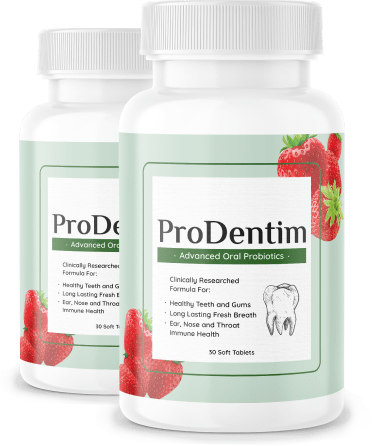
2 Bottles · 60-Day Supply
$79 / bottle
- ✓ You save $200
- ✓ 60-day money-back guarantee
- ✓ One-time payment, no subscription
Total: $358 $158 + $9.99 shipping
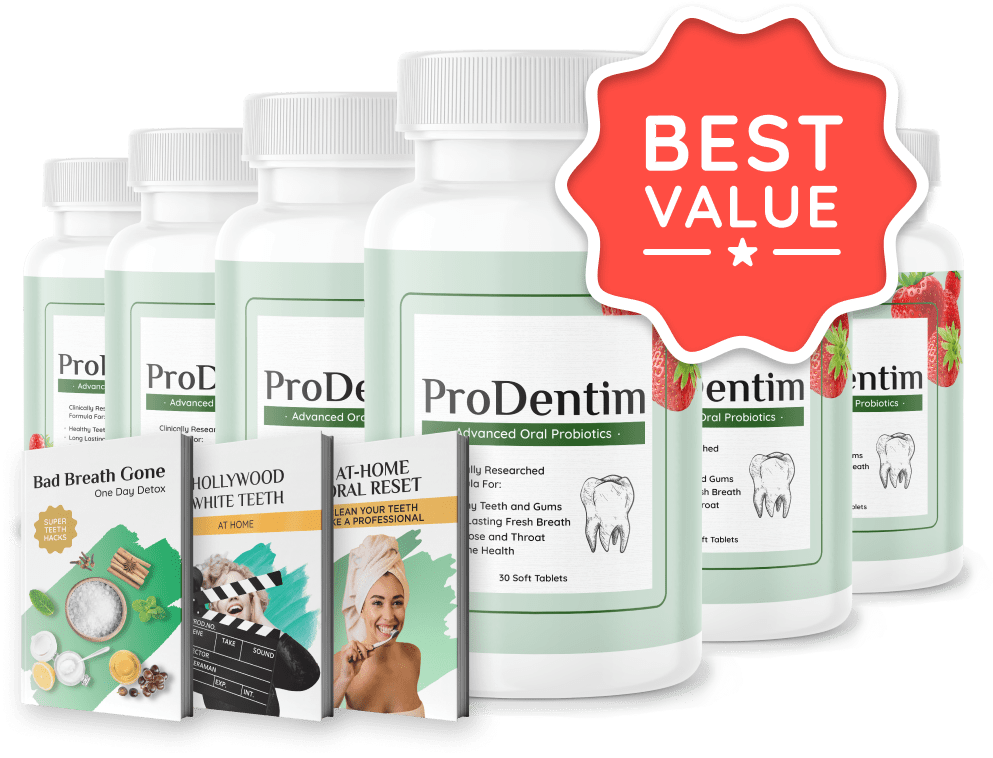
3+3 Bottles · 180-Day Supply
$49 / bottle
- ✓ You save $780 — biggest discount
- ✓ 60-day money-back guarantee
- ✓ 3 free bonus eBooks included
- ✓ Free shipping
Total: $1074 $294 · free shipping
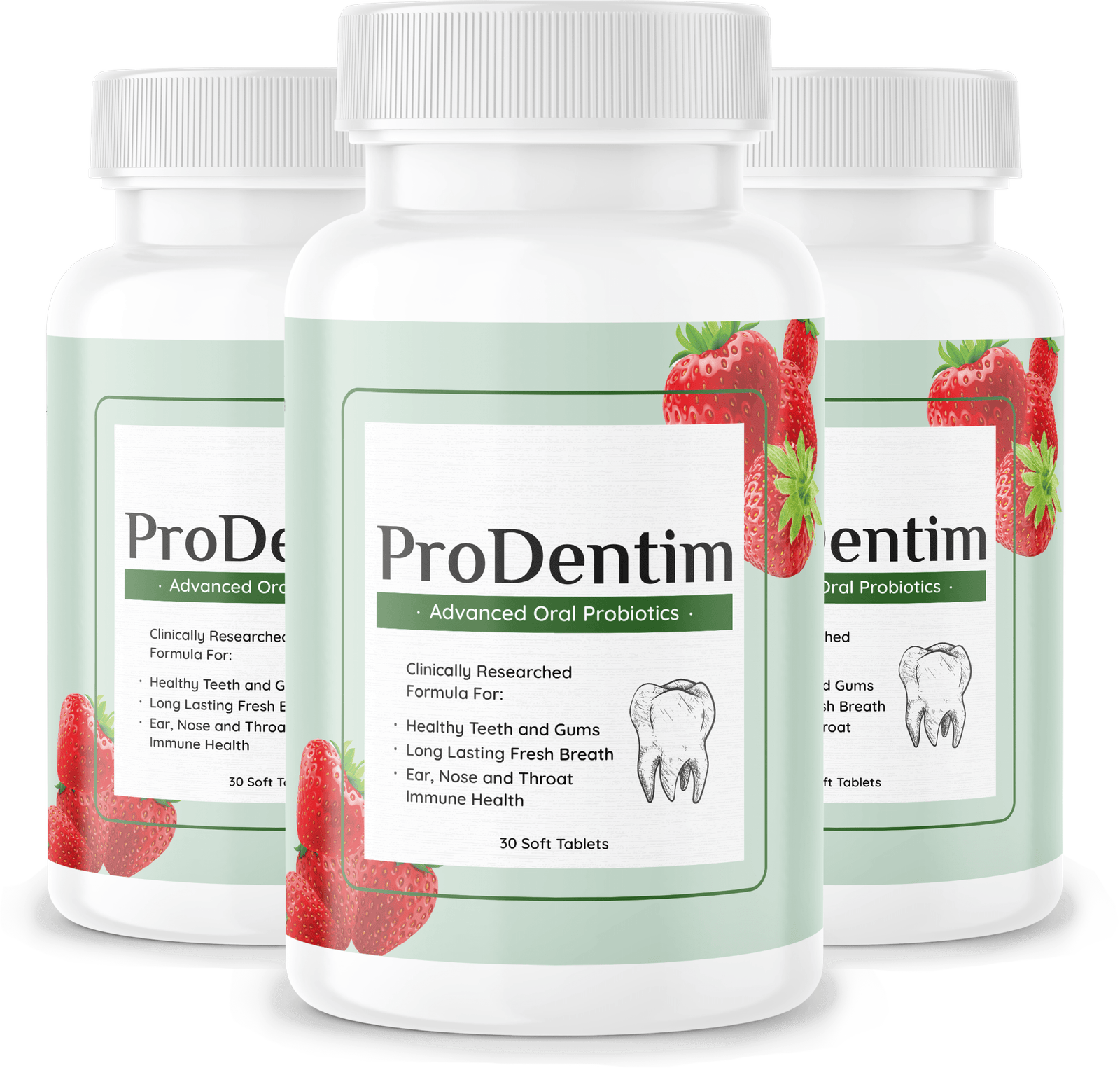
2+1 Bottles · 90-Day Supply
$69 / bottle
- ✓ You save $330
- ✓ 60-day money-back guarantee
- ✓ Free shipping
Total: $537 $207 · free shipping
Prices and bundle details shown are pulled directly from ProDentim’s official order page and can change — click any package above to see live current pricing.
The options at the time we checked (they can change, so confirm on the official order page): Basic, 2 bottles for 60 days, $79 per bottle ($158 plus $9.99 shipping); Most Popular, 2+1 bottles for 90 days, $69 per bottle ($207, free shipping); Best Value, 3+3 bottles for 180 days, $49 per bottle ($294, free shipping, 3 free bonus eBooks). Each carries a 60-day money-back guarantee, and each is a one-time payment, not a subscription.
What is actually in ProDentim?
Each bottle holds 30 soft chewable tablets, and the recommended use is one tablet chewed daily. The ingredients our main review identifies are summarized below, along with our read of how strong the evidence is for each. “Evidence level” here is an editorial judgment about the research on the ingredient in the oral-health context, not a claim about the finished product.
| Ingredient | What it is | Role in the formula | Evidence for oral health |
|---|---|---|---|
| Lactobacillus reuteri | Probiotic bacterial species | Lead strain for gum and plaque balance | Best of the group. Small trials show modest effects on gum bleeding and plaque markers. |
| B. lactis and L. paracasei (and other strains) | Probiotic bacterial species | General oral and immune-supportive roles | Thinner for dental outcomes. Per-strain amounts are not disclosed. |
| Tricalcium phosphate | Calcium phosphate mineral | Mineral support, linked to remineralization | Strongest in toothpaste studies, not chewable supplements. |
| Malic acid | Fruit acid | Mild surface cleansing, saliva stimulation | Limited, especially for whitening. |
| Inulin | Prebiotic fiber | Feeds and supports the probiotic strains | Well established as a prebiotic in general, sensible and low risk. |
| Peppermint and flavoring botanicals | Flavoring | Taste and freshness | Not a health claim, mainly about taste. |
The review we published describes the formula as including these ingredients “among others,” so the table should not be treated as a complete label. Always compare it to the supplement facts panel on the product you receive.
Is Lactobacillus reuteri really enough?
L. reuteri is a species of bacteria that naturally lives in several parts of the human body and has been studied widely as a probiotic. In oral health, it has been examined for its effect on gum inflammation and plaque, and some small trials report modest reductions in bleeding and plaque markers over a period of several weeks. That is real, peer-reviewed research, and it is the reason we call ProDentim's foundation credible.
Whether it is “enough” depends on what you expect it to do:
- Enough to be a sensible concept? Yes. A well-studied strain is a better starting point than an invented ingredient.
- Enough to treat gum disease? No. Supplements are not treatments, and even in the research the effects are described as modest and tied to specific strains and doses.
- Enough to know the product works? No. We cannot match the amount of L. reuteri in a ProDentim tablet to the amounts used in the studies, because the label does not itemize it.
Another subtlety is that “L. reuteri” is a species, and probiotic effects are often strain-specific, meaning that two products both listing the same species can behave differently. This is one of the reasons transparency about the exact strain and dose matters so much, and it is the gap we return to in the CFU section below.
Our overall view is that L. reuteri is a good reason to take ProDentim seriously, and not a sufficient reason to expect results. For a realistic picture of what to expect from it, see does ProDentim really work.
What about B. lactis and L. paracasei?
The remaining strains in the blend include Bifidobacterium lactis (B. lactis) and Lactobacillus paracasei, along with others our review summarizes as “and more.” These are common probiotic species, found in many foods and supplements. B. lactis in particular has been studied extensively, but mostly in digestive and immune contexts. L. paracasei is also widely studied across various health contexts. Research specifically on these strains for teeth and gums is thinner than the research on L. reuteri.
What this means in practice:
- These strains probably add breadth to the blend rather than being the main reason it might work for your mouth.
- Their role is described by the manufacturer as general oral and immune-supportive, which is a broad claim that is hard to test.
- Because the amount of each strain is not disclosed, it is impossible to say whether the blend is mostly one strain or evenly divided.
Having several strains is not automatically better. Multi-strain products can be fine, but a longer list does not prove greater benefit, and each added species is another variable that has not been tested together in a finished product trial. We would call the supporting strains plausible and low risk, but not proven.
What does 3.5 billion CFU tell you, and what does it hide?
CFU stands for colony-forming units, a count of live bacteria capable of multiplying. ProDentim's label states a total of 3.5 billion CFU for the probiotic blend. By itself that number tells you the product is not a trivial dose, but it does not tell you what matters most.
The transparency gap is that the label does not break out CFU for each strain. That is a common industry practice, often justified as protecting a proprietary formula, but it has real costs for a careful buyer:
- You cannot tell how much of the 3.5 billion is L. reuteri, the strain with the best oral evidence.
- You cannot compare the dose with the doses used in published trials.
- You cannot tell whether the strains are present in proportions that the manufacturer has any research basis for.
- You cannot easily compare ProDentim with another product that does list strain-level doses.
Another often-overlooked point is that CFU counts on labels are usually measured at manufacture or guaranteed through expiration, and live bacteria decline over time, depending on storage. Our review advises keeping the tablets in a cool, dry place to help preserve them. If you buy a large bundle, think about how long the later bottles will sit on a shelf.
The CFU number is also not a quality score. More is not always better, and a precise, studied strain at an appropriate dose generally beats a bigger number of unspecified bacteria. If transparency matters to you, you could contact the manufacturer and ask for strain designations and per-strain amounts. The information may not be public, and we have not been able to confirm that it is.
If you do decide to write to the company, keep the questions simple and specific. Ask which strain designations are used for L. reuteri, B. lactis and L. paracasei; how many CFU of each strain are in a tablet at the end of shelf life; whether any independent lab has verified those counts; and whether the finished tablet has been studied in people. A confident manufacturer can answer these in a sentence or two. Vague replies, or no reply, are themselves information, and you can weigh them against the 60-day refund window when you decide how much to buy.
Why does ProDentim contain tricalcium phosphate?
Tricalcium phosphate is a calcium phosphate compound. Calcium and phosphate are the main building blocks of tooth enamel, so a calcium phosphate ingredient fits the idea of supporting tooth minerals. It is used in some toothpastes, often in modified forms combined with fluoride, to help deliver minerals to enamel surfaces, and it is also used more broadly in food and supplements, for example as a calcium source or anti-caking agent.
Our main review makes an important point: most of the strongest evidence for tricalcium phosphate's remineralizing effect comes from toothpaste studies, where the ingredient is applied topically and stays in direct contact with enamel. That is quite different from a chewable tablet, which is in your mouth for a short time before being swallowed. That does not make it a pointless addition, but the mechanism is better established in one delivery format than the other.
What this means for you:
- Do not treat the tablet as a replacement for fluoride toothpaste, which has the strongest evidence for protecting enamel.
- Do not expect the tablet to reverse existing cavities or repair worn teeth.
- If tooth sensitivity is your main concern, speak with a dentist. Our guide to tooth sensitivity to cold covers the causes and treatments with real evidence behind them.
It is a reasonable supporting ingredient. It is not a headline reason to buy.
What do malic acid and inulin do?
Malic acid
Malic acid is an organic acid found naturally in fruit, including strawberries, and gives some foods a tart edge. In oral care it is sometimes used for its mild surface-cleansing properties and because tartness can stimulate saliva flow. Saliva matters for both breath and tooth protection, and anyone who struggles with a dry mouth knows how uncomfortable it is, which is covered in our guide to dry mouth at night.
The evidence for a real whitening effect is limited, so treat any brighter feeling as a bonus. One general note: acids in and around the mouth can contribute to enamel wear when exposure is frequent and prolonged. The amount of malic acid in one tablet is not disclosed, and a single daily chewable is very different from sipping acidic drinks all day, but it is a fair question to raise with your dentist if you have eroded enamel or sensitive teeth.
Inulin
Inulin is a soluble fiber found in plants such as chicory root. It is a classic prebiotic, meaning a substance that certain beneficial bacteria can use as food, and it is commonly paired with probiotics. Its prebiotic role is best established in the gut. Whether it meaningfully feeds the specific strains in a mouth, where a tablet is chewed and swallowed fairly quickly, is less clear. In general, larger amounts of inulin can cause gas or bloating in some people, although the amount here is not disclosed and a single tablet is unlikely to be large. For more on tolerability, see our article on ProDentim side effects.
What else is in the tablet, and what is not on the label?
Our review mentions peppermint and other flavoring botanicals. They are there mostly for taste and a fresh feeling, and they are not a health claim. Peppermint can bother some people with reflux, since it may relax the muscle between the stomach and esophagus, so it is worth knowing if you are prone to heartburn.
The review does not provide a complete inactive-ingredient list or allergen information, and we do not want to guess at what is not in front of us. If you have allergies or sensitivities, particularly to dairy, soy, nuts or specific botanicals, read the supplement facts and the “other ingredients” panel on the official product page or your bottle before taking it, and ask the manufacturer if anything is unclear.
Also useful to know: the manufacturer markets the formula toward teeth, gums, fresher breath, and general ear, nose and throat comfort. The ear, nose and throat claim rests on the broader idea that a balanced oral microbiome matters beyond the teeth, and it is the hardest of the marketing claims to verify. We would not base a decision on it.
How does ProDentim compare with lozenges and other oral probiotics?
Oral probiotics come in several formats: chewable tablets, lozenges that dissolve slowly, powders, and probiotic-containing mouthwashes or toothpastes. Their main difference is contact time. A lozenge that dissolves over several minutes keeps the bacteria in the mouth longer than a tablet you chew and swallow, which in theory should increase the chance of exposure. Many of the published oral probiotic trials used lozenges or similar slow-release formats, so a chewable is not an exact match for much of the research.
If you are comparing ProDentim with any other oral probiotic, these criteria are more useful than slogans:
- Named strains. Does the label identify strains, not just species, and say how many CFU of each?
- Dose relative to research. Does it match the strain and dose used in human trials?
- Format and contact time. How long does the product stay in your mouth?
- Viability. Does the company say how CFU is guaranteed through expiration and how to store it?
- Finished-product evidence. Has the actual product been tested, not only its ingredients?
- Price per month and refund terms. Compare the real, total cost, not the headline per-bottle price.
- Honest claims. Does the marketing avoid promising treatment or cures?
By that checklist, ProDentim does well on a named lead species, a clear refund policy and honest positioning as a complement to dental care, and less well on strain-level transparency and finished-product evidence. Our main review noted that its price range is in line with or below many competing oral probiotics. For a neutral look at a different oral-health formula, see our review of Provadent.
Frequently Asked Questions
What are the main ProDentim ingredients?
A 3.5 billion CFU probiotic blend including Lactobacillus reuteri, B. lactis and L. paracasei, plus tricalcium phosphate, malic acid, inulin, and peppermint and other flavoring botanicals. Check the official label for the complete list.
Is L. reuteri proven to work for gums?
It has been studied, and small trials report modest reductions in gum bleeding and plaque markers. That is encouraging but not proof that ProDentim works, since strain, dose and format matter.
Why doesn't ProDentim list the amount of each strain?
We do not know the manufacturer's reasons. Not itemizing strains is a common practice in the industry, but it makes the product harder to evaluate. Contacting the company is the only way to ask.
Does the tricalcium phosphate rebuild enamel?
Not in the way fluoride toothpaste is used to protect it. The strongest evidence for its remineralizing role is in topical toothpaste studies, not chewable supplements.
Can malic acid whiten teeth?
The evidence for a dedicated whitening effect is limited. If whitening is your main goal, a purpose-built whitening product will probably do more.
Are the ingredients in ProDentim safe?
They are common, food-derived compounds that are generally well tolerated, but individuals differ, and some people should check with a doctor first. We cover this in ProDentim side effects: is it safe?
Where can I read about how the product is priced and sold?
See is ProDentim a scam, plus price, refund and where to buy safely for the details on bundles and the guarantee.
Our Take
Is L. reuteri really enough? As a foundation, it is about as good as you can reasonably ask from a product in this category, and it puts ProDentim on firmer ground than many supplements that rely on invented ingredient stories. As a guarantee, it is not enough. The supporting strains are thinly studied for dental outcomes, the tricalcium phosphate evidence comes from toothpaste, the malic acid evidence is limited, and the inulin is sensible but unremarkable.
The most meaningful weakness is transparency. Without strain-level CFU numbers and without a finished-product trial, you are trusting a reasonable idea more than a measured result. If that is acceptable to you, and you value a chewable format and a 60-day guarantee, ProDentim is a defensible product to consider. If you need named strains, doses and trials, you may want to look elsewhere or ask the manufacturer for more detail first. And whichever way you go, the formula is a complement to brushing, flossing and dental checkups, not a replacement.
Related reading: our complete ProDentim review, does ProDentim work, ProDentim reviews and complaints, and tooth sensitivity to cold: causes and relief.
Disclosure: we may earn a commission if you buy through our links, at no extra cost to you. That does not change our assessment.