Gluco6 Ingredients Explained: The Disclosed Doses and the Hidden Proprietary Blend
Gluco6 ingredients fall into two very different groups. Three nutrients, vitamin D3 (50 mcg), vitamin B1 (100 mg) and chromium as chromium niacinate (1 mg), are printed on the label at exact doses. Seven other ingredients are bundled into a single 525 mg proprietary blend with no individual amounts. That split is the key to understanding the Gluco6 formula: you can judge part of it precisely and the rest only in general terms.
This guide walks through every ingredient group on the Supplement Facts panel, explains what each one is, how strong the research is for blood sugar, which parts are dosed and which are hidden, and what cautions apply. It is designed to be read alongside our full Gluco6 review, and it is informational only: nothing here is medical advice, and anyone with diabetes, prediabetes or glucose-lowering medication should check with a doctor before taking it.
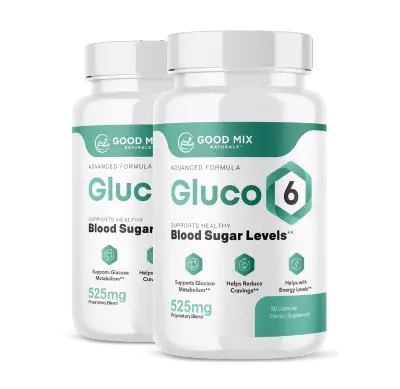
2 Bottles · 60-Day Supply
$69 / bottle
- ✓ Good starting point to test personal response
- ✓ Backed by the 60-day money-back guarantee
- ✓ Small shipping fee applies
Total: $138 + shipping
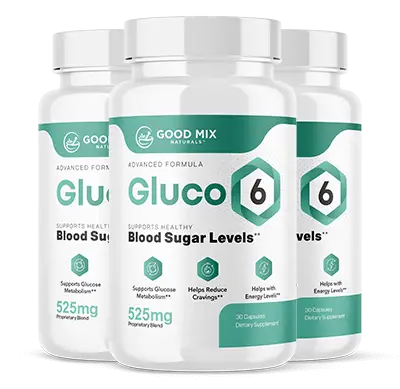
3 Bottles · 90-Day Supply
$49 / bottle
- ✓ Includes 2 free bonus eBooks (Sweetly Slim, Neuro Nourish)
- ✓ Backed by the 60-day money-back guarantee
- ✓ Free U.S. shipping
Total: $147, free shipping
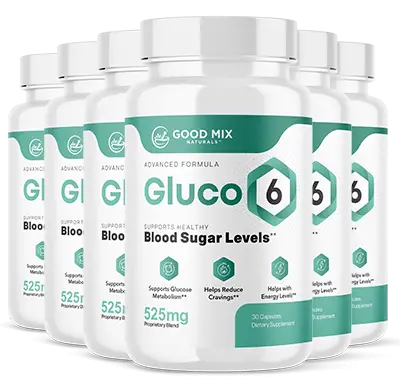
6 Bottles · 180-Day Supply
$39 / bottle
- ✓ Lowest available per-bottle price
- ✓ Includes 2 free bonus eBooks (Sweetly Slim, Neuro Nourish)
- ✓ Free U.S. shipping + 60-day guarantee
Total: $234, free shipping
Prices and package details shown are pulled from currently available marketing sources and can change — click any package above to see live current pricing on the official order page.
Prices, at the time we checked and subject to change: 2 bottles (60 days) at $69 per bottle, $138 plus a small shipping fee; 3 bottles (90 days) at $49 per bottle, $147 with free U.S. shipping and 2 free bonus eBooks; 6 bottles (180 days) at $39 per bottle, $234 with free U.S. shipping and the same eBooks. A 60-day money-back guarantee applies. Check the official order page for current terms.
What Is Actually on the Gluco6 Label?
The product is a once-daily capsule made by Good Mix Naturals and sold as a 30-capsule bottle. According to our main review, the Supplement Facts panel lists:
- Vitamin D3 (as cholecalciferol): 50 mcg
- Vitamin B1 (as thiamine mononitrate): 100 mg
- Chromium (as chromium niacinate): 1 mg
- A 525 mg proprietary blend of Sukre prebiotic fiber (L-arabinose), theobromine, green tea leaf extract (98% polyphenols, 65% EGCG), eleuthero root, theacrine (as TeaCrine), Cassia cinnamon bark and gymnema sylvestre leaf
The remaining “other ingredients” are a vegetable capsule (hypromellose), microcrystalline cellulose, silicon dioxide, magnesium stearate and stearic acid, a fairly standard excipient list.
Which Gluco6 Ingredients Are Fully Dosed and Which Are Hidden?
Here is the whole picture in a single table before we go deeper. The evidence column reflects the general strength of human research for glucose or insulin-related outcomes, not a promise about this product.
| Ingredient | Role in the formula | Dose shown? | Evidence for blood sugar |
|---|---|---|---|
| Vitamin D3 | Insulin sensitivity support | Yes, 50 mcg | Moderate, mixed |
| Vitamin B1 (thiamine) | Carbohydrate metabolism | Yes, 100 mg | Moderate if deficient, limited otherwise |
| Chromium niacinate | Insulin action | Yes, 1 mg | Moderate, inconsistent |
| Sukre (L-arabinose) | Sugar spike blunting | No, in blend | Preliminary |
| Theobromine | Mild stimulant, mood | No, in blend | Limited |
| Green tea leaf (EGCG) | Insulin sensitivity, metabolism | No, in blend | Moderate |
| Eleuthero root | Adaptogen, energy | No, in blend | Limited |
| Theacrine (TeaCrine) | Alertness without a hard crash | No, in blend | Limited for glucose |
| Cassia cinnamon | Glucose metabolism | No, in blend | Moderate, mixed |
| Gymnema sylvestre | Cravings, glucose | No, in blend | Moderate |
What Do the Three Disclosed Gluco6 Ingredients Do?
Vitamin D3 (cholecalciferol), 50 mcg
What it is: the form of vitamin D your skin makes in sunlight, also available in supplements. 50 mcg equals about 2,000 IU, or 250 percent of the Daily Value used on the label.
Why it is here: low vitamin D status shows up in studies alongside reduced insulin sensitivity. That is an association, and trials that give vitamin D to people with adequate levels often show little change, while those that correct a real deficiency are more encouraging.
Cautions: the dose is a common supplemental amount and well under the tolerable upper limit, but if you already take a separate vitamin D or a multivitamin, add up your total. Your doctor can check your level.
Vitamin B1 (thiamine mononitrate), 100 mg
What it is: a B vitamin your cells use to convert carbohydrate into energy. The label dose is thousands of percent of the Daily Value.
Why it is here: deficiency has been linked to poor glucose tolerance, and some small studies find lower thiamine status in people with type 2 diabetes. Giving thiamine to someone who is low may help; giving more to someone who is replete may do very little.
Cautions: thiamine is water-soluble with a wide safety margin, and no upper intake limit has been set. Even so, it is sensible to tell any clinician who orders bloodwork or reviews your medicines that you take this supplement.
Chromium (chromium niacinate), 1 mg
What it is: a trace mineral. Chromium niacinate binds chromium to niacin, one of several supplement forms (chromium picolinate is another).
Why it is here: chromium is thought to assist insulin signaling. Some trials, especially in people with impaired glucose tolerance, report modest improvements; others show no meaningful effect. The overall literature is inconsistent.
Cautions: 1 mg is roughly 29 times the 35 mcg Daily Value. Our main review specifically advises people with kidney or liver concerns to discuss this dose with their doctor first. Chromium can also add to the glucose-lowering effect of medication, which is a reason to involve your prescriber if you take any.
What Is in the Gluco6 Proprietary Blend, Ingredient by Ingredient?
The 525 mg blend is the part you cannot see inside. Below is what each component generally is, based on our main review and well-established background.
Sukre prebiotic fiber (L-arabinose)
L-arabinose is a plant-derived sugar that the body does not use as a normal fuel. It has been studied for partly inhibiting sucrase, the enzyme that breaks table sugar into glucose and fructose, which could in theory soften the rise after a sucrose-rich meal. The studies tend to use gram-level amounts. Because a gram is a thousand milligrams and the whole Gluco6 blend weighs 525 mg, it is hard to see how this single ingredient could be present at such a dose alongside six others. Gastrointestinal effects such as gas or loose stools are the usual reported side effects of fibers like this, and they depend on dose.
Theobromine
Theobromine is the main stimulant in cacao, milder and longer-lasting than caffeine. It is more often added for mood and gentle energy than for glucose. We found no strong body of clinical research tying it specifically to blood sugar improvement. People sensitive to stimulants, or who have heart rhythm concerns, should discuss it with a clinician.
Green tea leaf extract (98% polyphenols, 65% EGCG)
This is a highly concentrated form of green tea. EGCG, the main catechin, has been studied for modest effects on insulin sensitivity and metabolic markers, usually at hundreds of milligrams. Standardization at 65 percent EGCG is a marker of a quality extract. The caution: concentrated green tea extracts taken in large amounts have been associated with liver problems in rare cases, and green tea contains some caffeine. How much is in each Gluco6 capsule is unknown.
Eleuthero root (Eleutherococcus senticosus)
Often called Siberian ginseng although it is a different plant, eleuthero is an adaptogen studied mainly for stress resilience and fatigue. Its direct evidence for blood sugar is thinner. It may interact with some medications, so ask your pharmacist if you take blood thinners, sedatives or other regular medicines.
Theacrine (TeaCrine)
Theacrine is a caffeine-like compound found in certain teas, sold here under the trademarked name TeaCrine. Human research focuses on alertness, mood and energy, with the claim that tolerance builds more slowly than with caffeine. Evidence for blood sugar is limited. Combined with theobromine and green tea, it adds to the total stimulant-type load in the capsule, which matters for people who are sensitive or have trouble sleeping.
Cassia cinnamon bark (Cinnamomum cassia)
Cinnamon is among the more researched spices for glucose, with trials and meta-analyses showing small reductions in fasting glucose, mostly in people with type 2 diabetes or prediabetes, and mixed overall results. The label lists Cassia, not Ceylon, even though some marketing says Ceylon. Cassia contains coumarin, and Germany’s Federal Institute for Risk Assessment has flagged long-term daily intake as a concern for sensitive people. At supplement-sized doses the risk is generally considered low, but because the Gluco6 amount is undisclosed, it cannot be assessed precisely. People with liver conditions should ask their doctor.
Gymnema sylvestre leaf
A climbing plant used in Ayurvedic medicine, gymnema is sometimes called the “sugar destroyer” because chewing the leaf can dull the taste of sweetness. Several human trials suggest modest blood sugar effects and reduced sugar cravings, often with gram-level extracts. It can add to the effect of glucose-lowering medicines, so anyone on such drugs must involve their doctor.
Why Do Proprietary Blends Matter for a Blood Sugar Supplement?
A proprietary blend is a legal labeling practice in which a company lists the total weight of a group of ingredients, in descending order of weight, without giving each amount. It is common and not illegal. It matters more for a blood sugar product than for, say, a general multivitamin, for three reasons.
1. Dose determines whether the research applies
A study that shows a benefit from a given amount of cinnamon or gymnema tells you nothing about a much smaller amount. If you cannot see the dose, you cannot compare it with the study.
2. Safety depends on dose too
Coumarin from Cassia cinnamon, caffeine-like compounds and green tea catechins are all dose-dependent concerns. Without amounts, neither you nor your pharmacist can add up your total intake from all sources.
3. Interactions with medication are dose-sensitive
For people taking glucose-lowering medicine, the question of how much extra glucose-lowering activity a supplement brings is exactly what a clinician needs to know. A hidden blend makes that estimate harder.
It is worth being fair. Companies often explain that blends protect their formulas from copying, and some potent standardized extracts can work at low weights. Because the blend is listed in order of weight and totals 525 mg, simple arithmetic puts an even split at roughly 75 mg per component, well below gram-level doses in many studies. Real splits are uneven, so the true number for any one ingredient could be higher or lower, and that uncertainty is the point.
Are the Gluco6 Ingredients Safe to Combine With Diabetes Medication?
This is the question that matters most for many readers. Several ingredients have their own glucose-lowering research: chromium, cinnamon, gymnema and green tea EGCG among them. Stacking them on top of insulin, metformin, sulfonylureas or other glucose-lowering drugs could, in principle, push blood sugar too low. Our main review says this risk is usually mild but real.
How Does the Gluco6 Formula Compare With the Evidence-Based Approach to Ingredients?
When we read any supplement, we ask a few consistent questions. Here is how the Gluco6 formula answers them.
- Are the ingredients plausible for the stated goal? Largely yes: chromium, thiamine, vitamin D, green tea, cinnamon and gymnema all have some research connection to glucose handling.
- Are the doses disclosed? Partly: three yes, seven no.
- Do disclosed doses match studied ranges? The vitamin D3 dose is a common supplemental amount, thiamine is high but safe, and chromium is well above the Daily Value. For the blend, it cannot be confirmed.
- Is the finished product tested? No clinical trial on it is known.
- Are there ingredients included mainly for marketing? Eleuthero, theacrine and theobromine have limited blood sugar evidence and appear to be there for the energy promise.
- Is the label consistent with the marketing? Not entirely: the Ceylon versus Cassia discrepancy is a real example.
Taken together, the formula is more thoughtful than many that load a dozen trace botanicals. It is less transparent than a product listing every dose. For a look at how well the evidence supports real-world effects, see our analysis of whether Gluco6 works.
Who Might Want to Ask About Specific Gluco6 Ingredients First?
- People with kidney or liver conditions: because of the 1 mg chromium dose and the Cassia cinnamon coumarin point.
- People on diabetes drugs or insulin: because of overlapping glucose-lowering activity and the risk of hypoglycemia.
- People on blood thinners or other regular medicines: because herbal ingredients such as eleuthero and green tea can interact with some medications. Your pharmacist can check.
- People sensitive to caffeine or with sleep, anxiety or heart rhythm concerns: because green tea, theobromine and theacrine are stimulant-type ingredients.
- Anyone pregnant, nursing or under 18: the label advises against use.
- People already taking vitamin D, B vitamins or chromium: to avoid duplicating doses.
If you are still working out whether your own blood sugar is a concern, our guide to insulin resistance symptoms and our free A1C calculator are helpful places to start before you decide on any supplement.
Frequently Asked Questions
What are the main Gluco6 ingredients?
Vitamin D3 (50 mcg), vitamin B1 (100 mg) and chromium niacinate (1 mg) are disclosed at exact doses. A 525 mg proprietary blend contains Sukre (L-arabinose), theobromine, green tea leaf extract, eleuthero root, theacrine (TeaCrine), Cassia cinnamon bark and gymnema sylvestre leaf.
Why aren’t the doses of the blend ingredients listed?
Proprietary blends list only the combined weight. Companies commonly say this protects their formulas, but the result is that you cannot verify whether any single ingredient matches a studied dose.
Is the cinnamon in Gluco6 Ceylon or Cassia?
The label lists Cassia (Cinnamomum cassia), even though some marketing materials say Ceylon. Cassia contains coumarin, which is why long-term daily intake is worth discussing with a doctor, especially for people with liver concerns.
Is 1 mg of chromium too much?
It is well above the Daily Value of 35 mcg, though chromium is generally well tolerated at typical supplemental doses. Our main review suggests anyone with kidney or liver concerns talk to their doctor first.
Does Gluco6 contain caffeine?
The label does not list caffeine, but the blend includes green tea extract, theobromine and theacrine, which are caffeine-related or stimulant-type compounds. If you are sensitive, ask your doctor or pharmacist.
Which Gluco6 ingredients have the strongest blood sugar research?
Chromium, green tea EGCG, cinnamon and gymnema have the most human research related to glucose, though results are mixed. Vitamin D3 and B1 are most relevant for correcting a deficiency.
Can I take Gluco6 with metformin or insulin?
Speak to your doctor first. Several ingredients can lower blood sugar, so combining them with medicine raises the risk of low blood sugar. Never stop or change a prescribed medicine on your own.
Our Take on the Gluco6 Ingredients
Read as a whole, Gluco6 is a formula with a solid, honestly labeled core and a less transparent outer layer. The three disclosed nutrients are sensible and dosed in the open, and the blend includes a couple of botanicals with genuine research histories. The gaps are equally clear: hidden individual amounts, no trial on the finished capsule, a cinnamon discrepancy between marketing and label, and several ingredients that look chosen more for energy than for glucose.
If you are considering it, ask your doctor about your vitamin D level, your kidney and liver health and your medication list, and bring the Supplement Facts panel with you. That conversation will tell you more about whether these specific ingredients make sense for you than any blend of marketing claims.
Related reading: Is Gluco6 a scam? Price and refund guide, Gluco6 reviews and complaints, and our overview of another metabolic formula, Liv Pure.
Disclosure: we may earn a commission if you buy through our links, at no extra cost to you, and it does not change our assessment. This article is informational and is not medical advice.