Gluco6 Review 2026: What We Found About the Formula, Evidence, Pricing and More
Gluco6 Review 2026: What We Found About the Formula, Evidence, Pricing and More
Gluco6 is a daily capsule from Good Mix Naturals that’s marketed to support healthy blood sugar levels, ease sugar cravings, and provide steady energy — without a prescription. If you’re reading this, there’s a good chance you’ve already seen the sales page, or you searched “Gluco6 review” because you want an honest look at what’s actually in the bottle before you spend money on it.
That’s exactly what this review is for. We ordered the product, read the Supplement Facts label line by line, cross-checked every listed ingredient against the published research, and compared the pricing against what’s actually stated on the official order page. We’re not going to hand you a made-up star rating or a “9.2 out of 10” — this site retired numeric scores because they tend to hide more than they reveal. What follows instead is a plain, evidence-based breakdown: what Gluco6 is, what’s realistic to expect from its ingredients, where the formula is genuinely well-built, and where it falls short of full transparency.
If you’re specifically trying to understand the mechanics behind blood sugar swings before you evaluate any supplement, our guides on insulin resistance symptoms and what to eat for prediabetes are a useful starting point — they explain the underlying physiology that a product like this is trying to support.
Gluco6 Review 2026 at a Glance
Before the full ingredient-by-ingredient breakdown, here’s the short version of this Gluco6 review: it’s a once-daily capsule with three fully-disclosed vitamin/mineral doses and a six-ingredient proprietary blend, sold in 2, 3, and 6-bottle packages, backed by a 60-day money-back guarantee. The sections below walk through exactly what’s in it, what the research on each ingredient actually shows, real current pricing, and the safety details worth knowing before you buy.
What Stood Out
- Three key micronutrients (D3, B1, chromium) disclosed at exact, well-researched doses
- Includes gymnema sylvestre and cinnamon, two of the more evidence-backed botanicals for blood sugar support
- Simple, relatively short ingredient list rather than an overloaded formula
- 60-day money-back guarantee on every package size
- Manufactured in the U.S.; label lists a real manufacturer address, phone number, and support email
Important Considerations
- The six-ingredient botanical blend is hidden behind a single 525 mg proprietary-blend total, so individual doses aren't disclosed
- Uses Cassia cinnamon rather than Ceylon, which carries a coumarin consideration at high, long-term daily doses
- Chromium dose (1 mg) is meaningfully above the standard Daily Value and warrants a conversation with a doctor for anyone with kidney or liver concerns
- No independent, published clinical trial exists on the finished Gluco6 formula itself — only on its individual ingredients
- Best per-bottle pricing requires buying the 6-bottle package upfront
What Is Gluco6, Exactly?
Gluco6 is a dietary supplement made by Good Mix Naturals, sold as a 30-capsule bottle (a one-month supply at the labeled dose of one capsule per day). It’s positioned in the blood-sugar-support category alongside products like Liv Pure and dozens of similar “glucose support” formulas, but its ingredient approach is narrower than most: instead of ten or more botanicals at trace amounts, Gluco6 leads with three fully disclosed vitamins and minerals, then adds a six-ingredient proprietary blend.
The product is marketed toward adults who are already managing borderline or elevated blood sugar through lifestyle changes and want an additional layer of support — people who’ve read about insulin resistance, are watching their A1C, or simply notice more energy crashes and sugar cravings than they’d like. It is explicitly not marketed as, and should not be treated as, a treatment for diagnosed diabetes.
Reading the actual Supplement Facts panel (rather than relying on the marketing page) is where a lot of the real story is. The label states: Vitamin D3 (as cholecalciferol) 50 mcg, Vitamin B1 (as thiamine mononitrate) 100 mg, Chromium (as chromium niacinate) 1 mg, and a 525 mg proprietary blend of Sukre™ prebiotic fiber (L-arabinose), theobromine, green tea leaf (98% polyphenols, 65% EGCG), eleuthero root, theacrine (as TeaCrine®), Cassia cinnamon bark, and gymnema sylvestre leaf. Other ingredients are a vegetable capsule (hypromellose), microcrystalline cellulose, silicon dioxide, magnesium stearate, and stearic acid — a standard, unremarkable “other ingredients” list.
How Does Gluco6 Work?
Rather than one single mechanism, Gluco6 is built to hit blood sugar management from a few different angles at once:
Micronutrient support for insulin signaling. Both chromium and thiamine (Vitamin B1) play established roles in how the body processes carbohydrates. Chromium is a cofactor that appears to enhance the action of insulin at the cellular level, and thiamine deficiency has been linked in research to impaired glucose tolerance — correcting a deficiency, where one exists, can meaningfully help. Vitamin D status has also been associated with insulin sensitivity in observational research, though the causal picture is less settled.
Craving and appetite support. Theobromine (a mild stimulant compound related to caffeine, found naturally in cacao) and the Sukre/L-arabinose ingredient are positioned here — L-arabinose is a plant-derived sugar that has been studied for its ability to partially inhibit the enzyme (sucrase) that breaks down table sugar in the gut, theoretically blunting part of a sucrose-driven blood sugar spike.
Traditional glucose-metabolism botanicals. Gymnema sylvestre and cinnamon are the two ingredients in this formula with the deepest research history for blood sugar specifically — both have been used traditionally for centuries and studied in modern clinical trials, discussed in detail below.
Energy without a hard crash. Eleuthero (Siberian ginseng) and theacrine (branded as TeaCrine®) are included as adaptogenic/energy ingredients — theacrine in particular is marketed as producing alertness similar to caffeine but with less of a subsequent crash, which is relevant to a product also trying to reduce energy dips tied to blood sugar swings.
It’s worth being direct about what this means in practice: these are plausible, individually-researched mechanisms, not a guarantee of a specific outcome for any one person. Blood sugar regulation is influenced heavily by diet, body composition, activity level, sleep, and — for many people — prescription medication. A supplement can be a reasonable supporting piece of that picture; it isn’t a mechanism that overrides the others.
Ingredient-by-Ingredient Analysis
Vitamin D3 (as cholecalciferol) — 50 mcg (250% DV). Evidence level: Moderate. Multiple observational studies associate low vitamin D status with reduced insulin sensitivity and higher diabetes risk, and some (not all) intervention trials in vitamin D-deficient populations show modest improvements in insulin sensitivity when levels are corrected. The dose here (2,000 IU equivalent) is a reasonable, commonly-used supplemental amount — well below the tolerable upper intake level — and is the kind of dose that could meaningfully help someone who is actually deficient, which a large share of adults are.
Vitamin B1 / Thiamine (as thiamine mononitrate) — 100 mg (8,333% DV). Evidence level: Moderate for deficiency correction, limited for people who are not deficient. This is a very high dose relative to the standard Daily Value, but thiamine is water-soluble with a wide margin of safety — the body excretes what it doesn’t use, and no upper limit has been established. Research does link thiamine deficiency to poor glucose handling, and some small trials suggest people with type 2 diabetes have lower thiamine status than average. Whether 100 mg provides a measurable benefit to someone who isn’t deficient is less clear.
Chromium (as chromium niacinate) — 1 mg (2,857% DV). Evidence level: Moderate. Chromium is one of the more-studied minerals for insulin sensitivity, and chromium picolinate/niacinate forms have shown modest improvements in glycemic markers in some clinical trials, particularly in people with impaired glucose tolerance — though other trials show no significant effect, and results are inconsistent across the literature. A 1 mg dose is meaningfully above the 35 mcg Daily Value; chromium supplementation is generally considered to have a good safety profile at typical supplemental doses, but this is exactly the kind of elevated-dose ingredient worth mentioning to a doctor, particularly for anyone with pre-existing kidney or liver conditions.
Sukre™ Prebiotic Fiber (L-Arabinose) — dose not disclosed (part of the 525 mg blend). Evidence level: Preliminary. L-arabinose has been studied for its ability to partially block intestinal sucrase, the enzyme that breaks sucrose down into glucose and fructose — in theory, blunting part of a sugar-driven blood glucose spike when sucrose is present in a meal. Most of the supporting research uses gram-level doses; since this ingredient sits inside an undisclosed proprietary blend alongside five other ingredients that together total 525 mg, it’s not possible to confirm the amount here is in a studied range.
Theobromine — dose not disclosed. Evidence level: Limited, specific to blood sugar. Theobromine is a mild stimulant compound naturally present in cacao, generally recognized as safe, with a longer and gentler half-life than caffeine. It’s more commonly included for a subtle energy/mood lift than for a direct glucose-lowering effect, and we found no strong, dedicated body of clinical research tying theobromine specifically to blood sugar improvement.
Green Tea Leaf, 98% Polyphenols / 65% EGCG — dose not disclosed. Evidence level: Moderate. EGCG, green tea’s primary catechin, has a reasonably large research base connecting it to modest improvements in insulin sensitivity and metabolic markers, generally at doses in the hundreds of milligrams. The high-potency standardization used here (98% polyphenols, 65% EGCG) is a genuinely good sign of ingredient quality — it’s a meaningfully more concentrated form than a generic green tea extract — but again, the exact milligram amount inside the blend isn’t disclosed.
Eleuthero (Eleutherococcus senticosus) Root — dose not disclosed. Evidence level: Limited, specific to blood sugar. Eleuthero (often called Siberian ginseng, though it’s a different plant genus than true ginseng) is a well-established adaptogen with research supporting general stress resilience and fatigue reduction. Its evidence base for direct blood-sugar effects in humans is thinner than its evidence base for energy and stress — it’s a reasonable inclusion for the “steady energy” part of the formula’s promise, less so as a glucose-specific active ingredient.
Theacrine (as TeaCrine®) — dose not disclosed. Evidence level: Moderate for alertness/energy, limited for blood sugar specifically. TeaCrine is a trademarked, well-studied form of theacrine, a compound structurally similar to caffeine. Human trials on TeaCrine generally focus on alertness, mood, and reduced tolerance buildup compared to caffeine — it’s a legitimate, evidence-supported energy ingredient, but it’s not a blood-sugar-specific compound in the research base.
Cinnamon (Cinnamomum cassia) Bark — dose not disclosed. Evidence level: Moderate, with an important caveat. Cinnamon is one of the more frequently studied spices for blood sugar, with a number of clinical trials (and several meta-analyses) showing modest reductions in fasting blood glucose, particularly in people with type 2 diabetes or prediabetes — though results across studies are mixed and effect sizes are generally small. The caveat that matters here: this label specifies Cassia cinnamon (Cinnamomum cassia), not Ceylon cinnamon (Cinnamomum verum), despite some Gluco6 marketing material describing the cinnamon as “Ceylon.” Cassia cinnamon naturally contains a compound called coumarin, which in large, sustained daily doses has been associated with liver effects in sensitive individuals — Germany’s Federal Institute for Risk Assessment (BfR) has specifically flagged daily long-term Cassia cinnamon intake as a coumarin exposure concern. Because the exact dose inside this proprietary blend isn’t disclosed, we can’t independently confirm how much Cassia cinnamon — and by extension how much coumarin — a daily capsule actually delivers. This is a real, worth-knowing consideration rather than a reason for alarm at typical supplement-level doses, but it’s exactly the kind of detail full dose transparency would resolve.
Gymnema Sylvestre (Gymnema sylvestre) Leaf — dose not disclosed. Evidence level: Moderate. Gymnema is sometimes called “the sugar destroyer” in Ayurvedic tradition, and it has one of the more substantial modern research bases among the botanicals here — several human trials suggest it can modestly lower blood sugar and reduce sugar cravings, and some research suggests it may blunt the perception of sweetness on the tongue, which lines up with its craving-reduction marketing angle. As with the other blend ingredients, the specific dose isn’t disclosed, and most positive trials used gram-level extracts rather than a fraction of a 525 mg total blend.
What Does the Research Say, Overall?
Stepping back from the ingredient-by-ingredient view: Gluco6’s formula is built on components that are individually plausible and, in several cases (chromium, EGCG, cinnamon, gymnema), backed by real published human research for blood sugar or related metabolic outcomes. That’s a genuinely different starting point than a formula padded with ingredients that have little to no research behind them at all.
What we can’t tell you — and what no honest review of a proprietary-blend product can tell you — is whether the specific amounts of those six blended ingredients match the doses used in the clinical trials that produced positive results. A 525 mg total split six ways averages under 90 mg per ingredient if evenly distributed, which is below the gram-level doses used in many of the strongest cinnamon and gymnema trials, though blends are rarely distributed evenly and some ingredients (like the potent 65% EGCG extract) can be effective at lower absolute weights than a crude botanical powder. As with most proprietary-blend supplements in this category, the honest takeaway is: plausible ingredients, unconfirmed doses, no clinical trial on the finished product itself.
None of this means Gluco6 doesn’t or can’t work for some people — it means the appropriate expectation is “a reasonable, evidence-informed formula that may provide modest support,” not “a clinically proven blood sugar fix.” Anyone with diagnosed prediabetes or diabetes should treat a product like this as a potential complement to — never a replacement for — medical care, diet, and (where prescribed) medication.
Pricing and Package Options
Gluco6 is sold directly through the official order page in three package sizes. Buying more bottles at once lowers the effective per-bottle price, which is standard for this category — the tradeoff is a larger upfront payment.
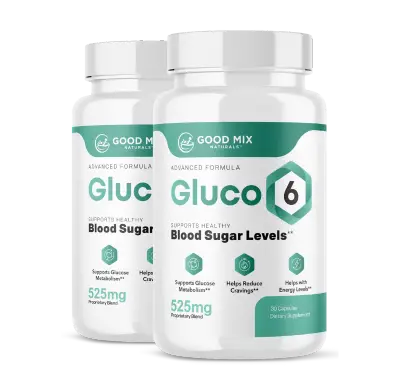
2 Bottles · 60-Day Supply
$69 / bottle
- ✓ Good starting point to test personal response
- ✓ Backed by the 60-day money-back guarantee
- ✓ Small shipping fee applies
Total: $138 + shipping
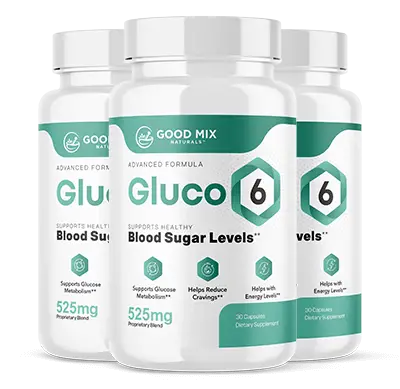
3 Bottles · 90-Day Supply
$49 / bottle
- ✓ Includes 2 free bonus eBooks (Sweetly Slim, Neuro Nourish)
- ✓ Backed by the 60-day money-back guarantee
- ✓ Free U.S. shipping
Total: $147, free shipping
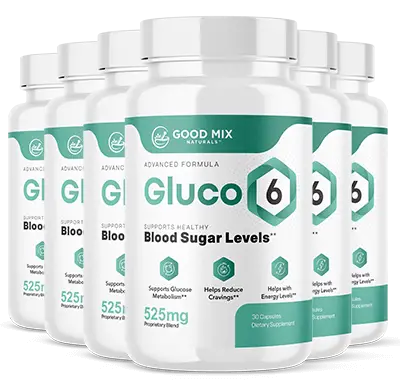
6 Bottles · 180-Day Supply
$39 / bottle
- ✓ Lowest available per-bottle price
- ✓ Includes 2 free bonus eBooks (Sweetly Slim, Neuro Nourish)
- ✓ Free U.S. shipping + 60-day guarantee
Total: $234, free shipping
Prices and package details shown are pulled from currently available marketing sources and can change — click any package above to see live current pricing on the official order page.
In plain text, for scanning: a single-tier starter package runs $69 per bottle for a two-month supply; the middle package drops to $49 per bottle for three bottles and adds two bonus eBooks; the largest package brings the price down to $39 per bottle across six bottles (a six-month supply), also with the two bonus eBooks and free shipping included.
The math here follows a familiar pattern in this category: buying six bottles at once nearly cuts the per-bottle price in half compared to the two-bottle option, which makes sense given that blood-sugar-related supplements are generally meant to be taken consistently over months, not days, for any of their ingredients (particularly the slower-acting ones like chromium and cinnamon) to have a fair chance to show an effect. The tradeoff is a larger upfront cost and more product to store if it turns out not to be a good fit. Since every package size carries the same 60-day guarantee, someone unsure about committing to six bottles isn’t taking on meaningfully more financial risk by doing so — just a larger initial outlay. Prices shown reflect the vendor’s currently advertised rates and are subject to change; always confirm current pricing on the official order page before purchasing.
Money-Back Guarantee
Every Gluco6 package — including the single two-bottle starter option — is covered by a 60-day money-back guarantee from the date of purchase. That window is on the longer end for this product category (many competitors offer 30 days), and it’s a meaningful amount of time to actually judge whether a metabolic-support supplement is doing anything noticeable, since ingredients like chromium and cinnamon are generally understood to work gradually rather than immediately.
To request a refund, contact the manufacturer directly using the information printed on the product label: Gluco6 (Good Mix Naturals), 19655 East 35th Drive, Ste 100, Aurora, CO 80011, support@gluco6.com, or by phone at (866) 864-7721. As with any supplement guarantee, we’d recommend keeping your order confirmation and, if you decide to return the product, initiating the process well before the 60-day window closes rather than at the last minute, and confirming return/shipping requirements directly with the manufacturer at the time of your purchase.
Who Might Consider This — Who Should Be Cautious
Gluco6 may be worth considering for: adults who are already working on diet and activity changes for borderline or elevated blood sugar and want an additional, lifestyle-compatible layer of support; people who specifically want a formula that discloses at least some of its key micronutrient doses rather than hiding everything behind a blend; and people comfortable with a “test and evaluate” approach backed by a 60-day guarantee.
Gluco6 is probably not the right fit for: anyone currently taking insulin or other blood-sugar-lowering medication without first talking to their doctor, since stacking a glucose-lowering supplement on top of a glucose-lowering medication raises the risk of blood sugar dropping too low (hypoglycemia); pregnant or nursing individuals and anyone under 18, per the label’s own warning; anyone with a diagnosed liver condition, given the Cassia cinnamon/coumarin consideration discussed above; and anyone who specifically wants full milligram-level transparency on every active ingredient, since the six-ingredient proprietary blend won’t provide that.
Safety Considerations
The label itself is direct about the basics: take one capsule daily, don’t exceed the recommended dose, and the product isn’t intended for anyone under 18 or for pregnant or nursing individuals. It also specifically instructs anyone taking medication or managing a medical condition to consult a physician before use — advice we’d underline rather than treat as boilerplate, especially given that this is a blood-sugar-focused formula.
Two specific points are worth flagging beyond the label’s own warnings. First, the Cassia cinnamon used here (rather than Ceylon, despite some marketing material referencing “Ceylon” cinnamon) contains coumarin, a compound that regulatory bodies including Germany’s BfR have flagged for potential liver effects with sustained high daily intake — a consideration that mainly applies at doses well above what a typical capsule-based supplement would contain, but one that’s harder to fully assess here because the exact cinnamon amount in the blend isn’t disclosed. Second, the chromium dose (1 mg, or roughly 29 times the standard Daily Value) is on the higher end for a supplement; chromium supplementation is generally well tolerated, but anyone with kidney or liver concerns should mention this specific ingredient and dose to their doctor before starting.
As with any supplement, individual reactions vary, and this review isn’t a substitute for professional medical advice. If you experience any unexpected symptoms after starting Gluco6, discontinue use and consult a healthcare provider.
What Stood Out
- Exact, generous doses disclosed for Vitamin D3, Vitamin B1, and chromium
- Includes gymnema sylvestre and cinnamon, both genuinely well-studied for blood sugar support
- 60-day guarantee applies to every package size, including the smallest
- Real, verifiable manufacturer contact information on the label
Important Considerations
- Six botanical/compound ingredients are hidden inside an undisclosed 525 mg proprietary blend
- Cassia (not Ceylon) cinnamon carries a coumarin consideration worth discussing with a doctor for long-term daily use
- No clinical trial exists on the finished Gluco6 formula, only on individual ingredients in isolation
- Requires consistent use over weeks to months before any effect would reasonably be expected
Frequently Asked Questions
Is Gluco6 legitimate, or is it a scam?
Gluco6 is a real, manufactured supplement with a verifiable U.S. business address, phone number, and support email printed directly on the product label, and it’s backed by a 60-day money-back guarantee that gives you a way to get your money back if it doesn’t work for you. That’s meaningfully different from the hallmarks of an outright scam (no real contact information, no refund path, no disclosed ingredients at all). Where we’d push back on the marketing rather than call it a scam: some sales material describes the cinnamon as “Ceylon” when the actual label lists Cassia cinnamon, and the proprietary blend means you can’t independently verify every ingredient’s exact dose. Those are transparency issues worth knowing about, not evidence of fraud.
How long does it take to notice a difference with Gluco6?
Because several of the formula’s key ingredients (chromium, cinnamon, gymnema sylvestre) are generally understood to work gradually rather than immediately, most people would need at least 4-8 weeks of consistent daily use before drawing any conclusions — which is part of why the 60-day guarantee window matters more than it might for a fast-acting supplement.
Can I take Gluco6 if I’m already on metformin or another diabetes medication?
Talk to your doctor first. Several ingredients in this formula (chromium, cinnamon, gymnema) have their own blood-sugar-lowering research, and combining them with a prescription glucose-lowering medication can increase the risk of hypoglycemia (blood sugar dropping too low). This isn’t a reason to assume the combination is unsafe — it’s a reason to have your doctor involved in that specific decision, ideally with a plan to monitor your blood sugar more closely for the first few weeks.
Is Gluco6 the same as Ceylon cinnamon supplements I’ve seen elsewhere?
No — worth noting, since some Gluco6 marketing describes the cinnamon as “Ceylon,” the Supplement Facts label itself specifies Cinnamomum cassia (Cassia cinnamon). We’re reporting what the label states, since that’s the more authoritative, legally-required source. See the Safety Considerations section above for why that distinction matters.
What exactly is in the “proprietary blend,” and why isn’t the amount of each ingredient listed?
The 525 mg blend contains Sukre™ prebiotic fiber (L-arabinose), theobromine, green tea leaf (98% polyphenols/65% EGCG), eleuthero root, theacrine (TeaCrine®), Cassia cinnamon bark, and gymnema sylvestre leaf. Manufacturers commonly use proprietary blends to protect their specific formulation ratio from being copied by competitors; the tradeoff, as discussed throughout this review, is that consumers can’t independently verify whether any single ingredient is present at a clinically meaningful dose.
Does Gluco6 help with insulin resistance specifically?
Several individual ingredients (chromium, cinnamon, gymnema, and to a lesser extent green tea EGCG) have research suggesting a role in insulin sensitivity, which is directly relevant to insulin resistance. That said, no clinical trial has tested the finished Gluco6 formula on people with diagnosed insulin resistance, so any benefit is inferred from the individual ingredients rather than proven for the product itself. If you’re trying to understand whether you might be dealing with insulin resistance in the first place, our guide on insulin resistance symptoms walks through the early warning signs worth knowing.
Should I change my diet while taking Gluco6, or is the supplement enough on its own?
No supplement, including this one, is designed to offset an otherwise high-sugar, low-fiber diet. The ingredients here are additive support, not a substitute for the dietary changes that have the strongest evidence base for blood sugar management. Our prediabetes diet guide covers what to eat and avoid if you’re specifically trying to improve blood sugar through food first.
I don’t have a diabetes diagnosis — could this still be useful for me?
Possibly, if you’re noticing early warning signs. Many people take a blood-sugar-support supplement after noticing symptoms like energy crashes after meals, frequent sugar cravings, or unexplained fatigue, sometimes before ever getting a formal diagnosis. If any of that sounds familiar, our guide to prediabetes symptoms is worth reading before deciding whether this kind of product fits your situation — and it’s also worth getting an actual fasting glucose or A1C test from your doctor rather than relying on symptoms alone.
How does Gluco6 compare to other blood sugar supplements you’ve reviewed, like Liv Pure?
Liv Pure and Gluco6 target overlapping but distinct goals — Liv Pure leans more toward liver-support-driven metabolism and weight management, while Gluco6 is built more specifically around glucose-metabolism micronutrients and botanicals. If you’re comparing the two, our full Liv Pure review breaks down its formula using this same evidence-based approach, without a numeric score.
How does Gluco6 compare to just tracking A1C or average blood sugar directly?
Gluco6 targets the inputs (diet-adjacent nutrients and botanicals associated with insulin sensitivity), while your A1C and average glucose numbers are the outputs that actually show whether any approach, supplement or otherwise, is moving the needle. If you want to see exactly what a given A1C result means in everyday mg/dL or mmol/L terms, our free A1C calculator converts it instantly using the same ADA-endorsed formula your doctor’s office uses, which makes it a useful way to track whether any intervention, including a supplement like Gluco6, is actually correlating with a real change over the following months.
Pricing, package contents, and guarantee terms reflect the information available on the official Gluco6 order page at the time of publication and are subject to change without notice. This article is for informational purposes only and is not medical advice; consult a qualified healthcare provider before starting any new supplement, particularly if you are pregnant, nursing, under 18, or taking medication for diabetes or another medical condition.
Affiliate Disclosure: The Health Primer earns a commission if you purchase through links in this article. This never affects our independent evaluation — see our Review Methodology.